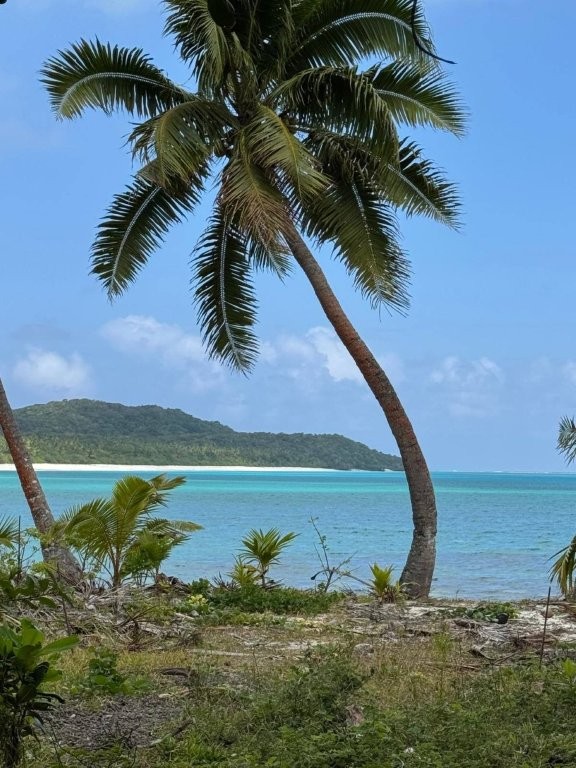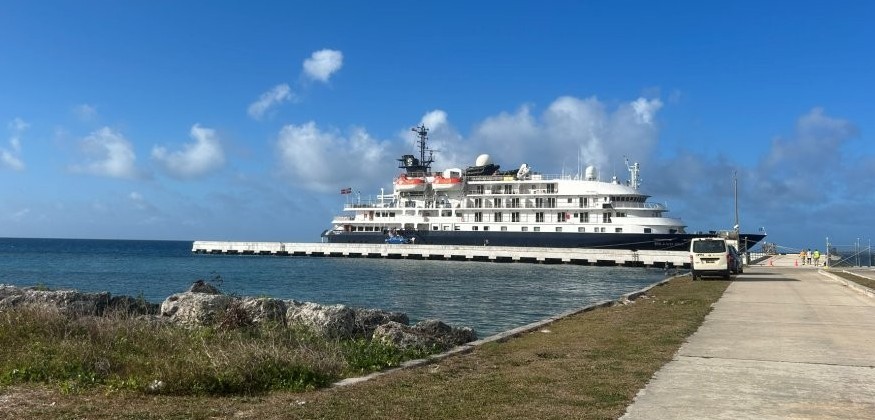

I decided not to break this up into two parts, so settle down with a coffee or glass of wine. I currently have 40 photos to add in, I think I might need to do a bit of weeding.
Puzzles for you, to start today’s Post.
A) We leave London on Saturday at 1500, then fly for eleven hours to Los Angeles, eight hours behind the UK. We have a three-hour layover then another eleven-hour flight to Nadi (Fiji), which is seven hours ahead of LA. When do we arrive, date and time, both UK and local?
B) We leave Pape’ete, Tahiti at 2345 on Sunday (not the day after the Saturday above, I’m not The Doctor). The flight is eight hours to LA, which is nine hours behind Tahiti. We have a five-hour layover then a final eleven-hour flight back to London, eight hours ahead of LA. When do we arrive in London (forget LA and Tahiti times, I already have)?
C) Are we mad? (As if that wasn’t enough, the clocks went back the Saturday after we got home. I’m not sure I’ve recovered yet).
Those of you with good geography or a love of old films will have worked out where we were from today’s title: the South Pacific. Yes, another cruise, they make life so much easier for me, no unpacking, not stuck in a hotel room if I can’t get around and lots to see and do. There’s the ship’s library, jigsaws to be finished, crew and other lazy souls to chat to. Meanwhile, JD can go off exploring. I missed caves, a vanilla farm, pearl farms and many rugged coastal walks on this one, in case you think my cruise description is complete.
What I hadn’t quite grasped is that Noble Caledonia have different types of cruises, including: river (e.g. the Bordeaux trip), British Isles (e.g. the ones we booked that were cancelled), Small Ship Cruising (mostly relaxed sailing) and Expedition Cruises (e.g. the Seychelles we did in 2024 and this one). These involve getting into Zodiacs (RIBs) and getting your feet wet, as well as trekking through places, going onto desert islands etc. I should at least read the blurb before JD books the next one.
I have bad news to tell you: Bali Hai is not real. In fact, the whole film (the original from 1935 with Clark Gable, not the 1958 with Marlon Brando nor the 2001 remake with Glenn Close) was not shot in the South Pacific but in the USA! Hawai’i to be exact, so at least it was on an island or two, not in a Hollywood studio.
https://balihai.com/posts/bali-hai-the-mythical-mystical-island-in-south-pacific
Sorry to make you cry. Why not listen to and watch the song here? That at least is real. It makes me shiver (in a good way).
Back to the holiday. As we were about to get out of the lift and into the Heathrow car, we remembered we hadn’t frozen the milk we’d left. I got out with the bags, JD stayed in the lift to go back up. I heard banging but didn’t clock that I had the keys and JD was stuck in the lift! It was not easy to re-open the doors for some reason. (I think I was maybe mildly panicking). One of the concierge team was passing and he managed to calm me down so I could pass the keys over. Nothing worse than coming home to sour milk in the fridge (well, milk split in your car probably is worse).
Once on the plane, we had a glass of champagne to relax us. As departure time arrived, our Captain announced that something was not releasing the plane from the jetty and it was going to take 10 to 20 minutes before the engineer could release it. Don’t worry, I’m not going to give you a supplementary puzzle.
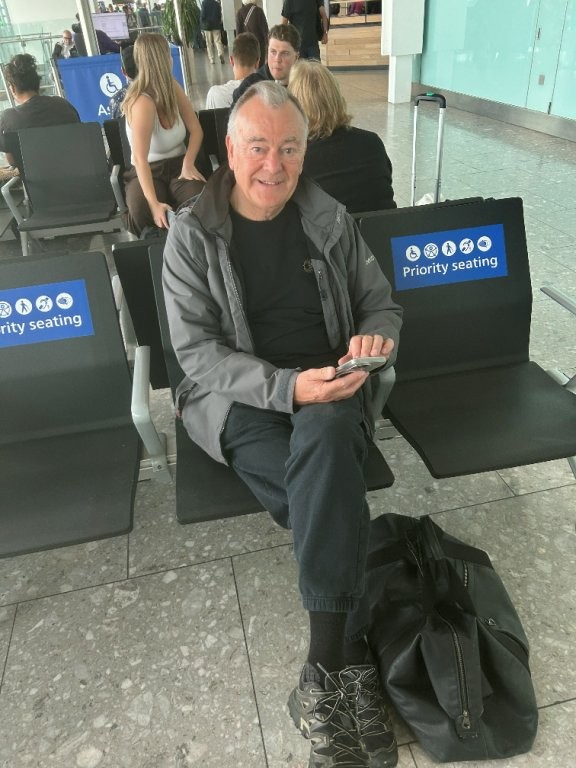
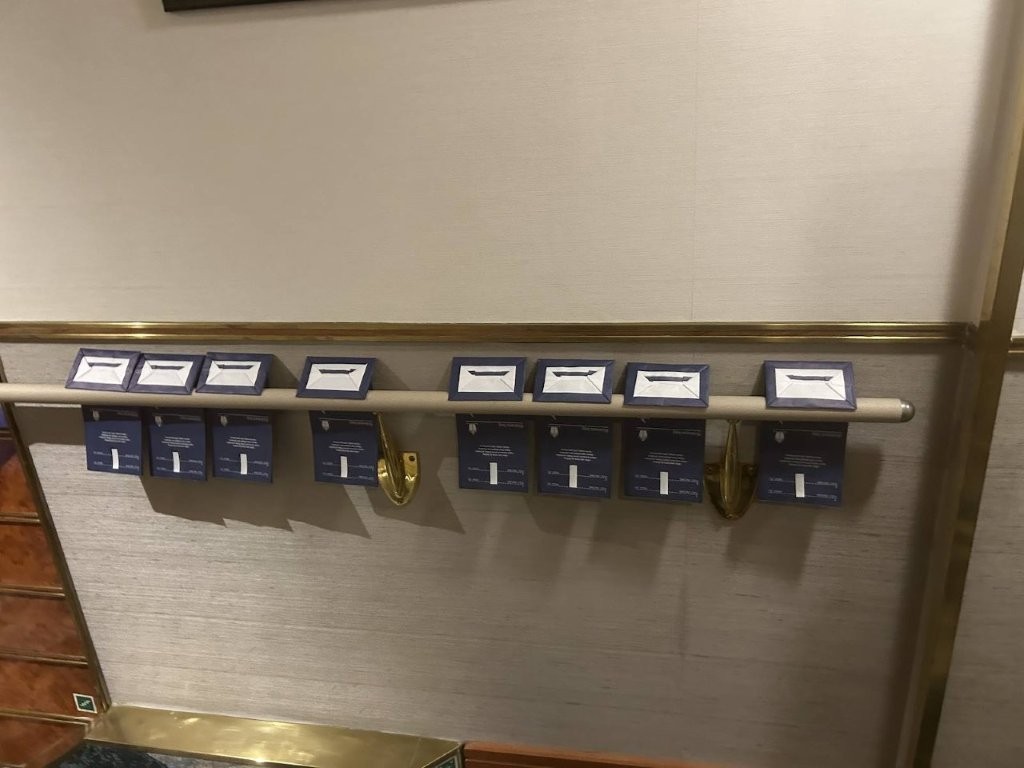
Gone are the days of glamorous travel. I remember my first flight, aged about seven or eight I think, to Jersey. In those days they took pictures as you disembarked the plane. From memory, my dad was wearing a suit and tie. Now look (not just at JD)…
Once in LA you have to pick up your luggage and go through passport control and customs, despite being in transit. I reckon it’s just a way of making you pay for an ETSA or Visa. George had warned us that using a perfectly good ten-year Visa (as both he and JD have) and not having an Esta could cause questions, as he had experienced last year. Thankfully, JD must have looked less risky, as we were (almost) waved through. We did have to prove that we were leaving by showing our itinerary: fortunately, I’d printed it as you were not allowed to turn your phones on.
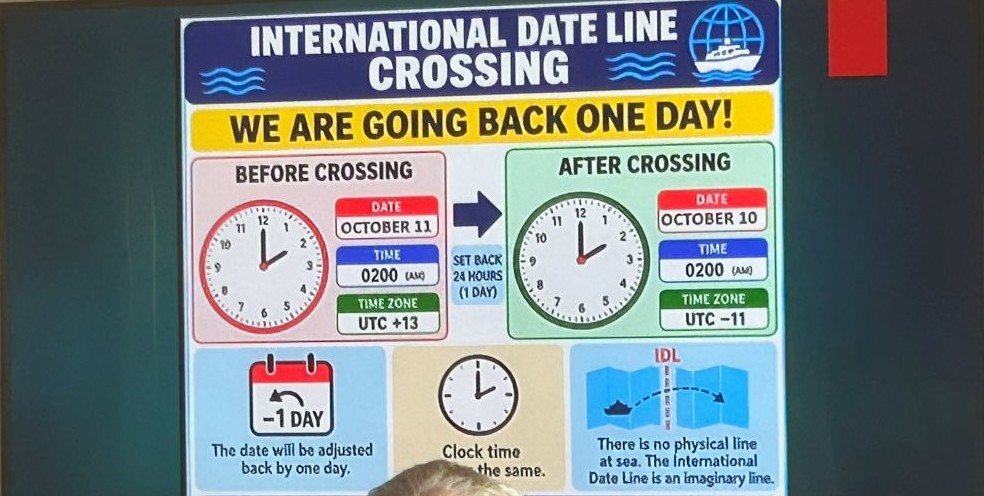
We arrived at the Fiji check-in with all the other cruise passengers. Each one of us had to show our itinerary to prove where we were going. In fact, it was worse, as we had to find the original booking, with our names on, to match our passports. Maybe they were worried about a whole load of pensioners becoming illegal immigrants in the South Seas? We crossed the International Date Line for the first time. It is not only imaginary, a mere human construct, but it’s not even straight, taking in clusters of islands and political areas.
https://oceanservice.noaa.gov/facts/international-date-line.html
One poor chap was most upset as his birthday disappeared. I guess it was a bit like when the calendar was changed from Julian to Gregorian in 1582 (finally completed in 1926 in Turkey).
https://www.timeanddate.com/calendar/julian-gregorian-switch.html
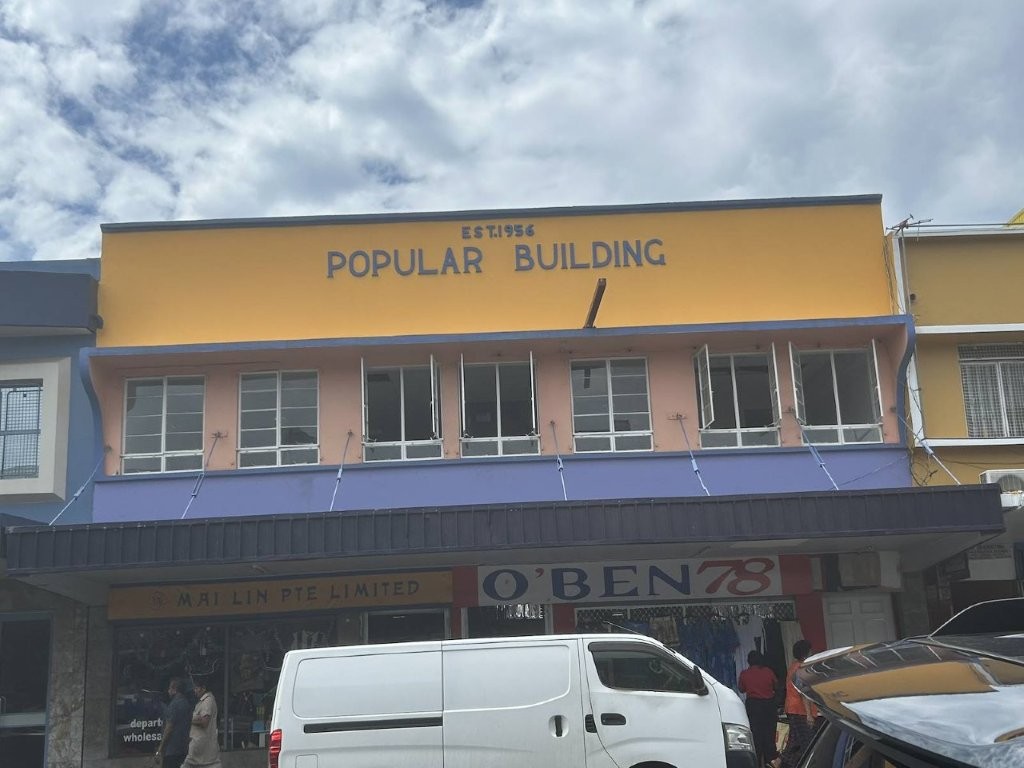
Once in Fiji, we had a bus ride to the ship, arriving at 0700, just in time for breakfast. Everywhere we went, people, including the children, shouted ‘Bula’ and we shouted back. It means hello, health be with you.. Our guide told us about aspects of life including the education system. He said that you cannot leave school until you pass your English exams! The main exports of Fiji are sugar cane and Fiji bottled water (and tourism).
The islands we visited are supported by either New Zealand or are part of French Polynesia, so France. Land ownership seems to be passed down the generations, and there are no burial sites on most of the islands, you just put your ‘loved ones’ in the garden. I’m not sure how this is going to work in future, as the land is divided between the children and more is used up to bury the parents.
We had most of the day on board before we set sail. As with the Vietnam trip, they kept trying to force-feed us delicious snacks. Having realised we had some wet landings that I might want to participate in, JD and I headed off to the town to buy me some waterproof shoes. Another passenger was wanting to send a postcard to her grandsons. We found a Post Office and she disappeared for quite a while, coming back with the postcard. She was told that they cannot send postcards from Fiji to the UK, but she could not get a sensible answer of why not.
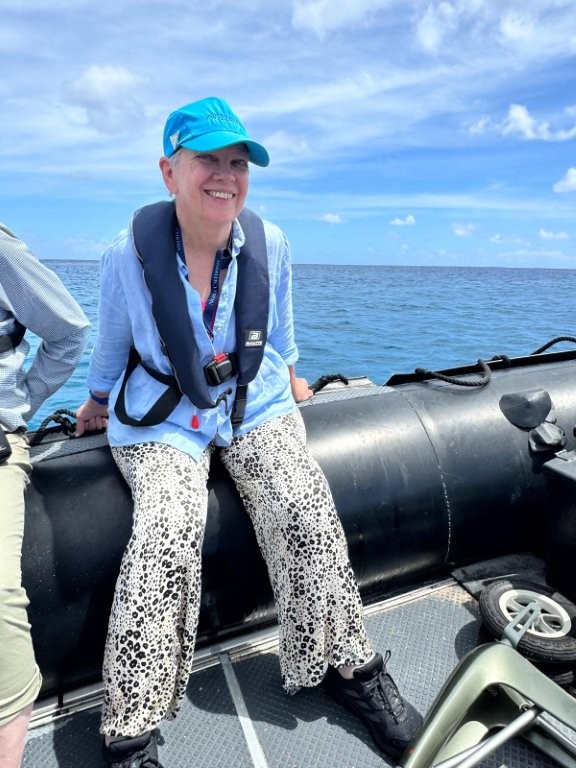
The next day we arrived at Levuka Island (still part of Fiji). We used the Zodiacs to get to the Kings Wharf so I didn’t need my new shoes. Levuka was originally the capital of Fiji and all the buildings are preserved; you can repaint in the same colour and repair but not change anything. If you think that sounds a bit like living in an old house in the UK, you’d be on the right track, it’s a UNESCO site. Fiji was first inhabited 3,500 years or so ago by the Lapita people, coming over from South East Asia. The original name was Viti, meaning East or sunrise.
http://www.fijihighcommission.org.uk/about_1.html
The first Europeans to discover them were the Dutch, followed by the English explorer Captain Cook in 1774. From the early 19th century it became a commercial centre, with Americans and Europeans building warehouses, port facilities etc. It was obvious that the missionaries had had a big influence, with many grand churches and schools run by the different Christian denominations.
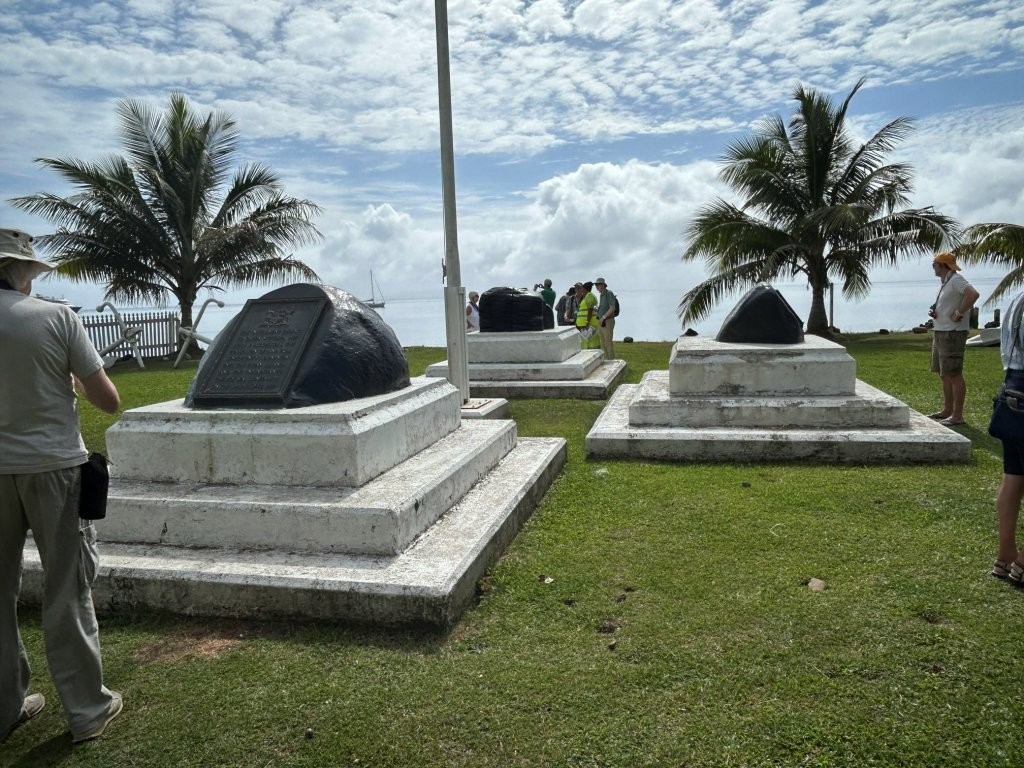
We walked to the stones at the Deed of Cession site, commemorating both the peaceful ceding in 1874 to Great Britain and independence in 1970, then back the other way to the Town Hall, where we experienced a traditional kava ceremony (not cava, a different drink entirely) with dancing and singing. I was lucky enough to be the first there, due to chickening out of the long walk (in very hot conditions) and taking a taxi, so I had my own private ceremony before everyone else arrived. I made the right decision, as we found out one of our passengers had fainted due to the heat.
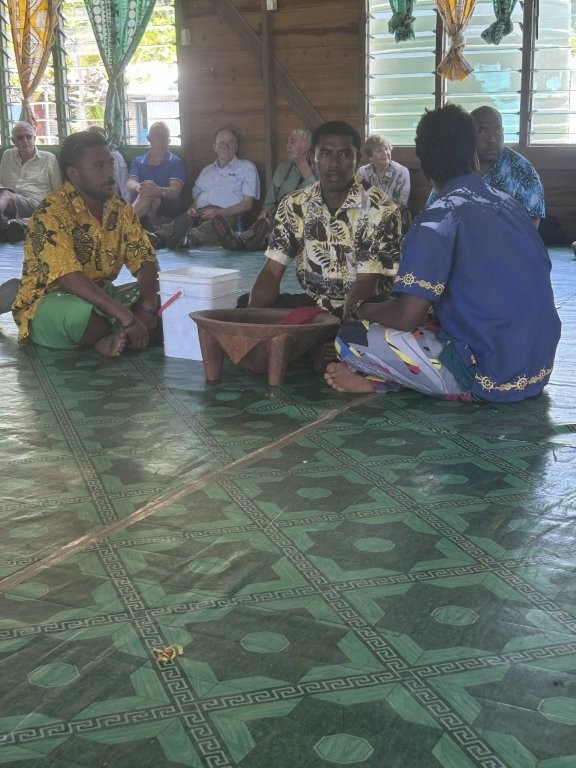
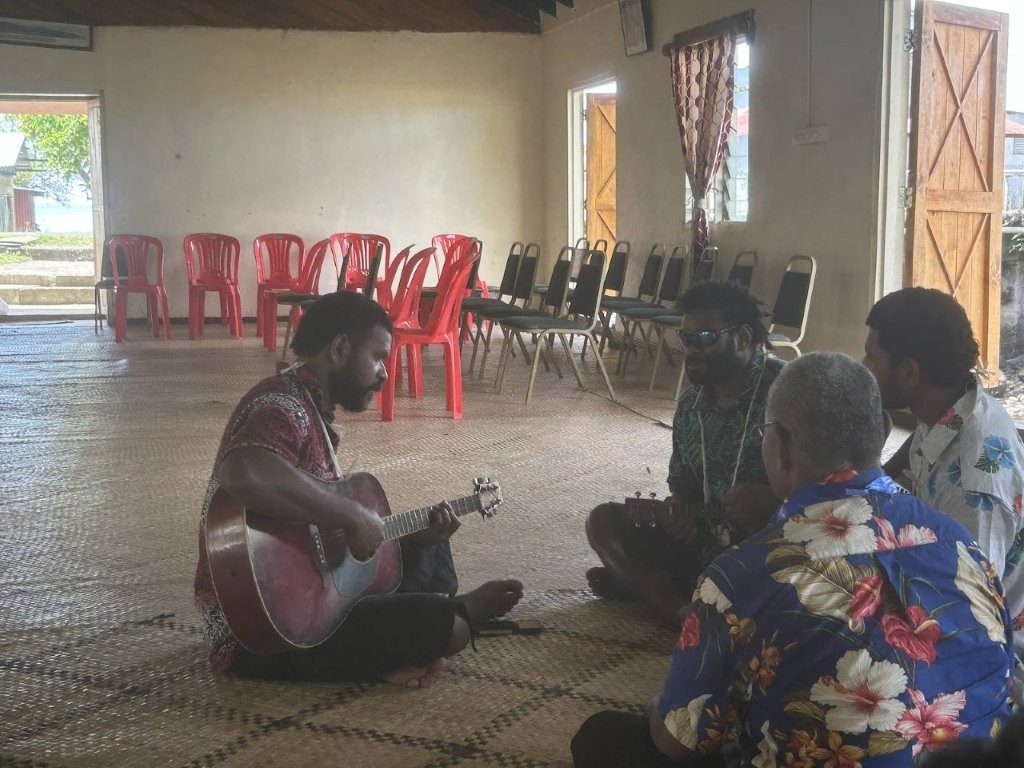
I’m not sure I enjoyed the kava, it was an experience. They make it from ground roots of a pepper shrub, put into a bag and squeezed with water prior to drinking. It is reported to be a mild intoxicant, good for headaches, depression etc, causing numbness to the lips and mouth. I must be immune as it had no effect, it was like drinking muddy water. The musicians sang kava-related folk songs in Fijian. The ceremony involved the chaps preparing the kava clapping once, then me clapping once, downing the preparation in one like a shot, then clapping three times to show I’d finished. I felt that once was enough.
That night was the Captain’s Dinner and we were invited to his table! Thankfully it’s not the sort of ship where you wear evening dress, as I hadn’t packed any. We were given the menu, and in my ignorance, I thought we had to order each course, so I did. Starter, soup, salad, and main. The rest of the table had to sit politely while I worked my way through everything. I did decide to miss the dessert as I was pretty full by then.
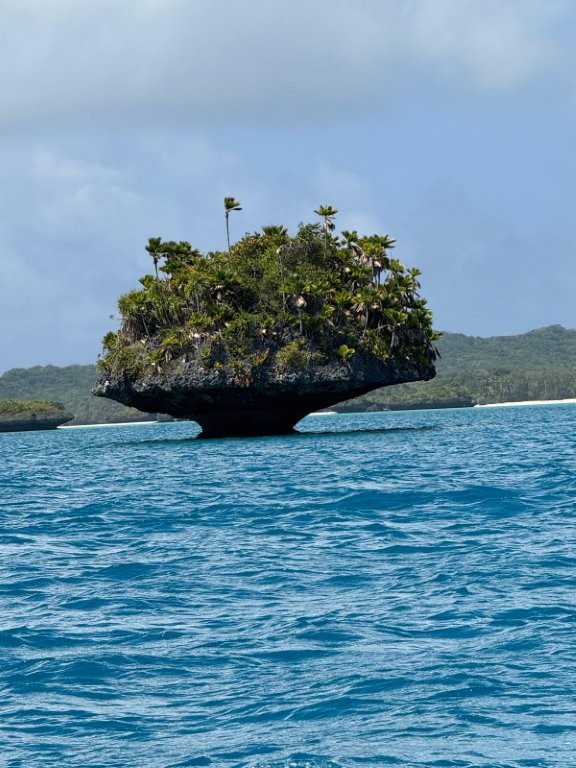
Our next island was Fulaga, where it was a wet landing. We took the Zodiacs through a beautiful lagoon, full of mushroom shaped limestone islands.
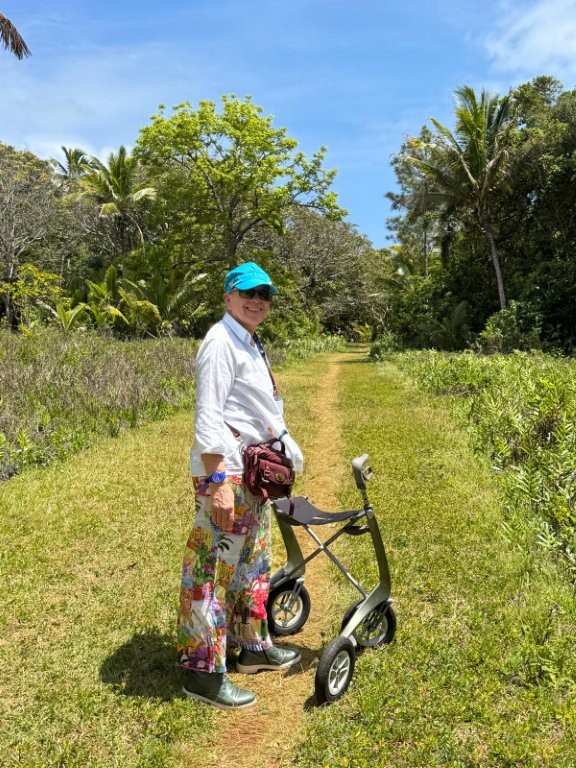
At the landing we waded ashore and changed our shoes then trekked for about twenty minutes over tree roots and stones to the village. The walk was described as approximately one mile with 20 meters of elevation. We think they mixed imperial and metric just to confuse us. The village was worth visiting: timber houses with tin roofs. There was one derelict concrete building, which we were told had been damaged by the sea air so no more were built in this modern way.
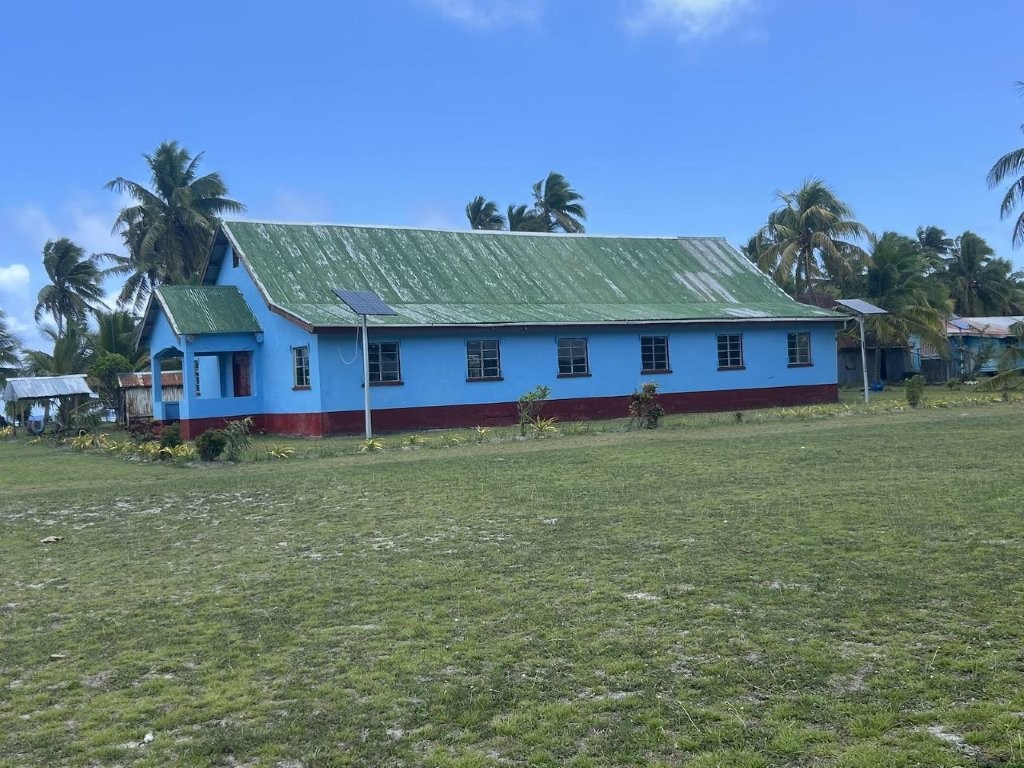
We entered the village hall, next door to a very smart blue church, and were greeted by singing and dancing. Once a few of us had sampled the local kava (it looked the same as the previous stuff) we were invited to examine the wood carvings on sale outside. As the island is known for its traditional carving, we felt we had to buy something. Thankfully no outrigger canoes were there (I can just see JD deciding to row it home, can’t you?) so we settled for a rather pretty platter.
Back on the ship, we set off for Tonga. What we’d not considered was how big the Pacific really is, and how little land there is to break up the waves. Suddenly we saw sick bags being placed everywhere and fewer people at dinner. We were fine, but I did discover that a wheeled device (my Rollator) is not good on a pitching deck.
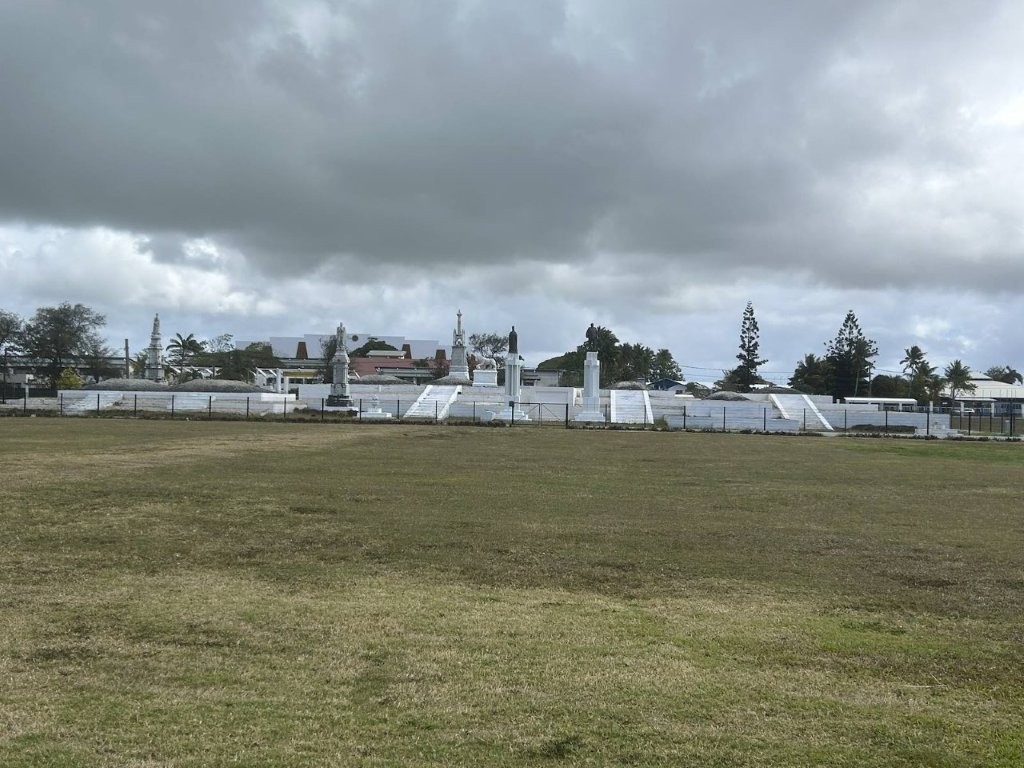
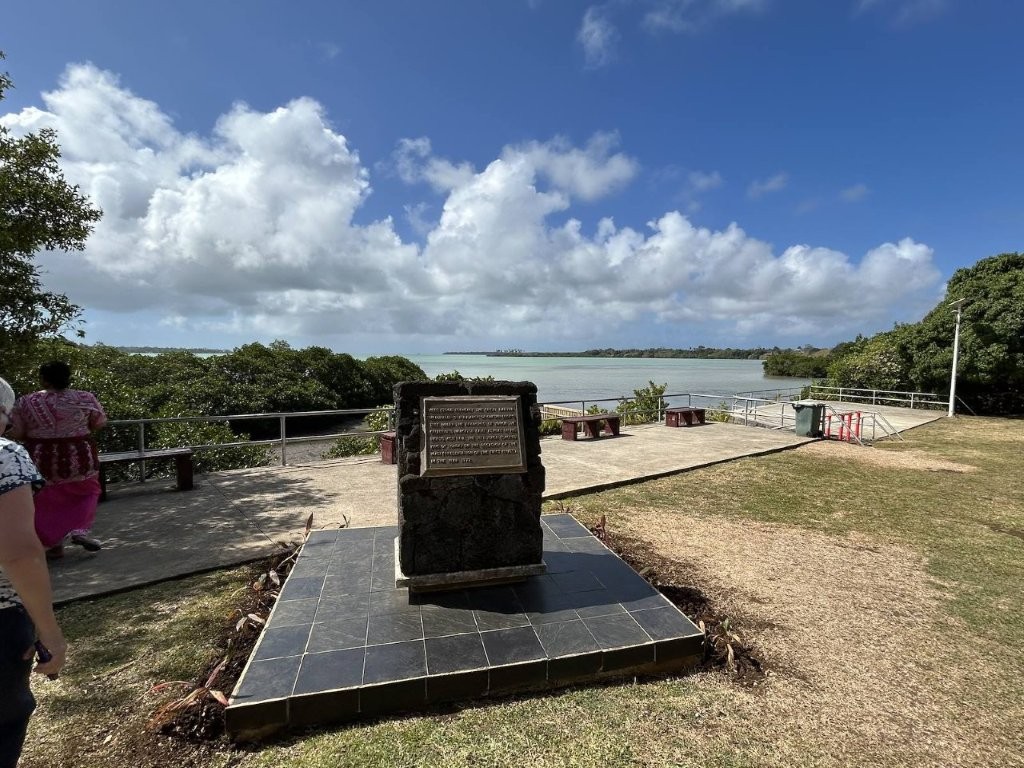
We arrived at Tongatapu, the main island of Tonga the next day and took a bus tour around the capital Nuku’alofa to see the Royal Tomb (which we could not approach as it is on sacred land) and the Royal Palace (which we could only see outside as it is not open to the public). We passed many, many churches and church schools of all denominations on our way to Captain Cook’s Landing Site, where he first set foot on Tongan soil in 1777.
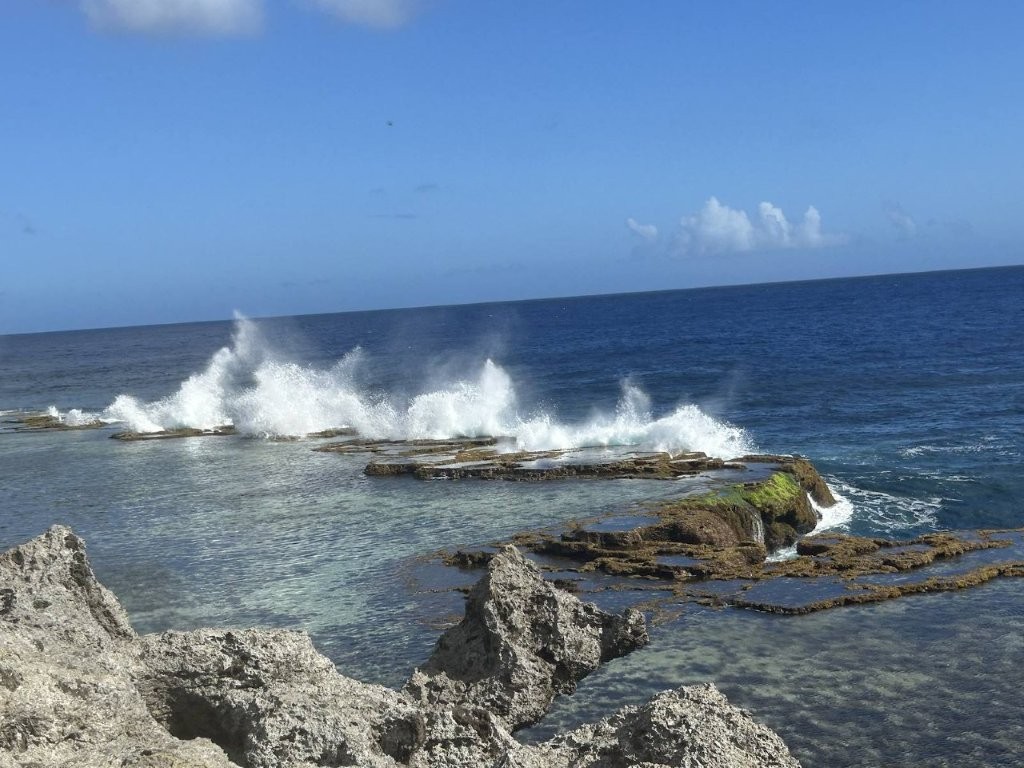
After that, the main excitement for everyone was to go and see the blowholes. We were obviously a Shipload of Philistines, although they are reported to be the most spectacular in the South Pacific. Maybe we appreciate the natural world more than man-made structures.
We were meant to visit a couple of other islands, but this is where the word ‘Expedition’ comes into play. Be warned, if you ever plan a trip to Pitcairn or Easter Island, you might only see it from afar if the wind is in the wrong direction or the sea is deemed too rough and you cannot make landfall. We thus sailed to Neiafu (don’t ask me how all these places are pronounced, please) and spent a night there. Those who had the energy (not me) visited the Botanical Gardens. In the evening, as we were alongside, we had a bit of a walk around town and then a couple of beers on dry land.
The next two days are rather confusing as they were both Saturday 10th October, due to crossing the International Date Line. We were at sea with swells of three to four meters and the ship corkscrewing along. The deck was formally closed after Someone decided to take a walk. No names were mentioned, but shortly after JD re-appeared in our cabin, a public announcement was made that it was too dangerous to walk outside so please stay off the decks.
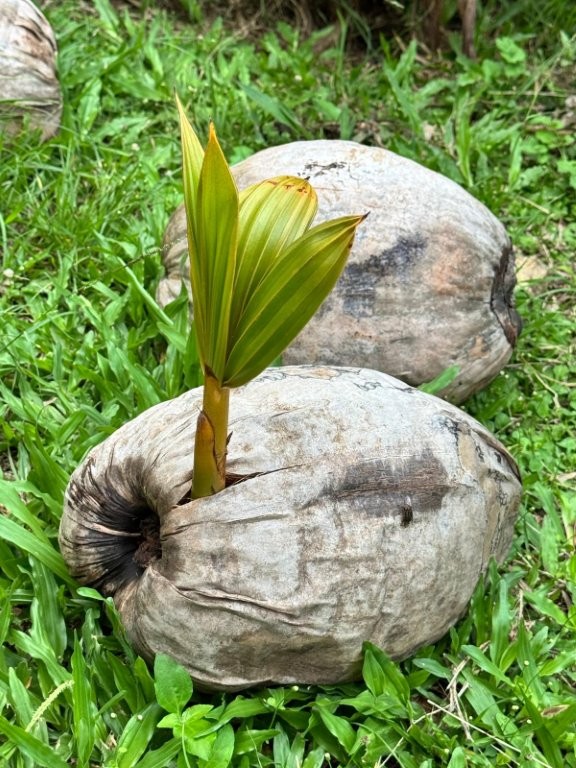
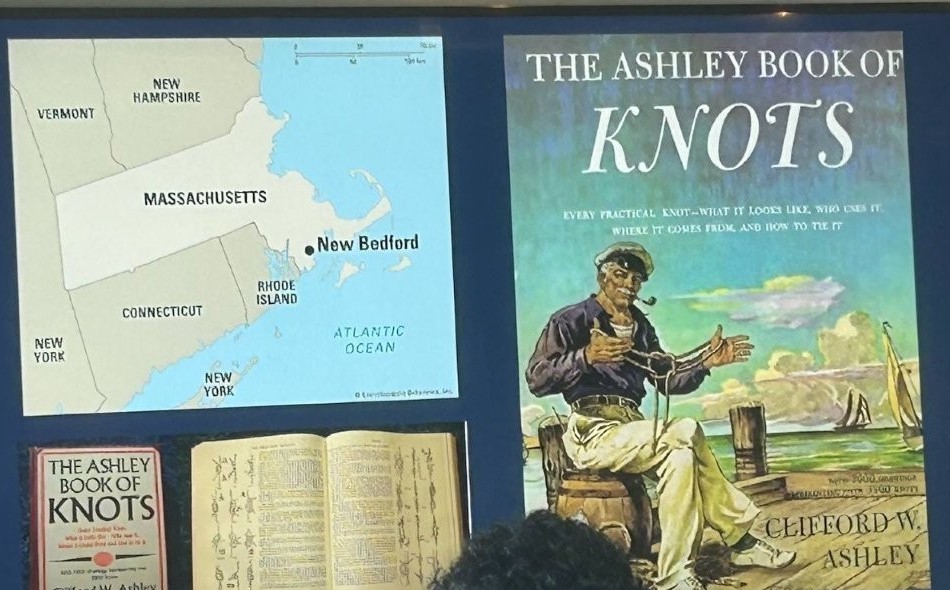
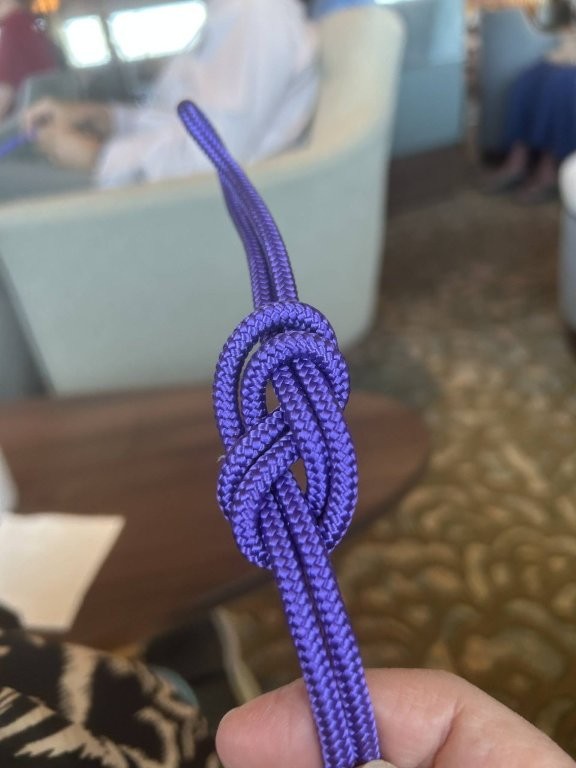
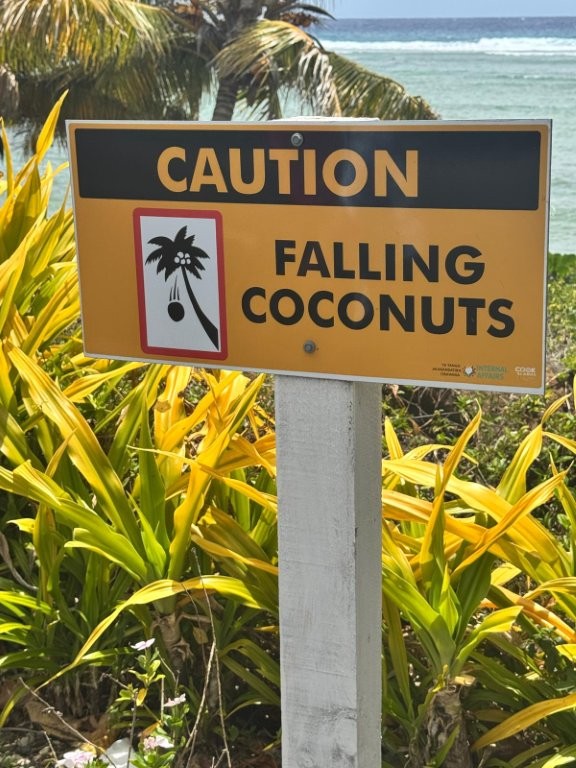
Regardless of the date, we had three days at sea. I would like to say we learnt a lot about the wildlife, micro-organisms, tardigrades etc, coconuts, Dutch explorers, Captain Cook, Robert Louis Stevenson, Mutiny on the Bounty and the various islands, but I’ve forgotten most of it. The most important thing that enabled the population to stay in the islands was coconuts. They provide food, clothing, roofing etc etc. We had a session on how to tie knots, which quite a few people were already proficient at, due to being yachties. I’ve forgotten how to tie them already, but the one below is one of mine on the day.
Two talks were on how to take better photographs with your mobile phone: I hope you appreciate my improved skills. One evening we watched the Disney cartoon Moana, which is (loosely) based on a Polynesian legend. Regrettably (for me) they did not show the original film of South Pacific, nor any of the Mutiny films. Another evening we had a 70’s singalong, hopefully not a portent of Things to Come.
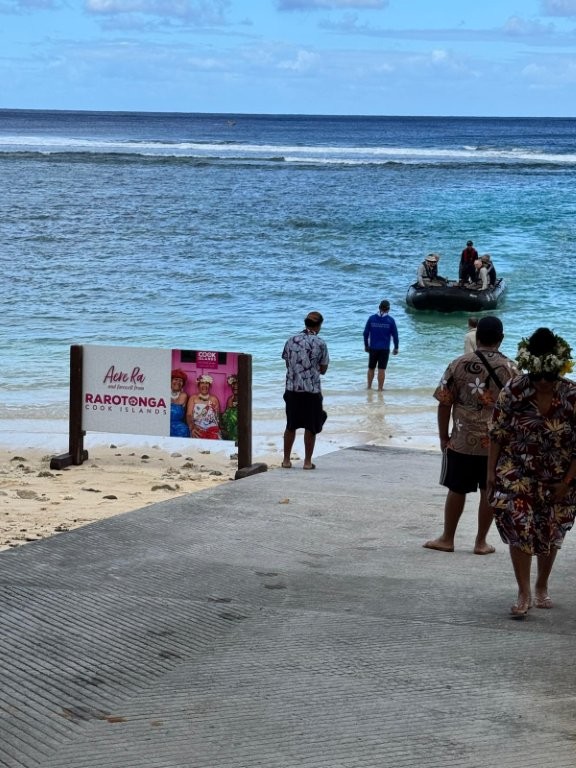
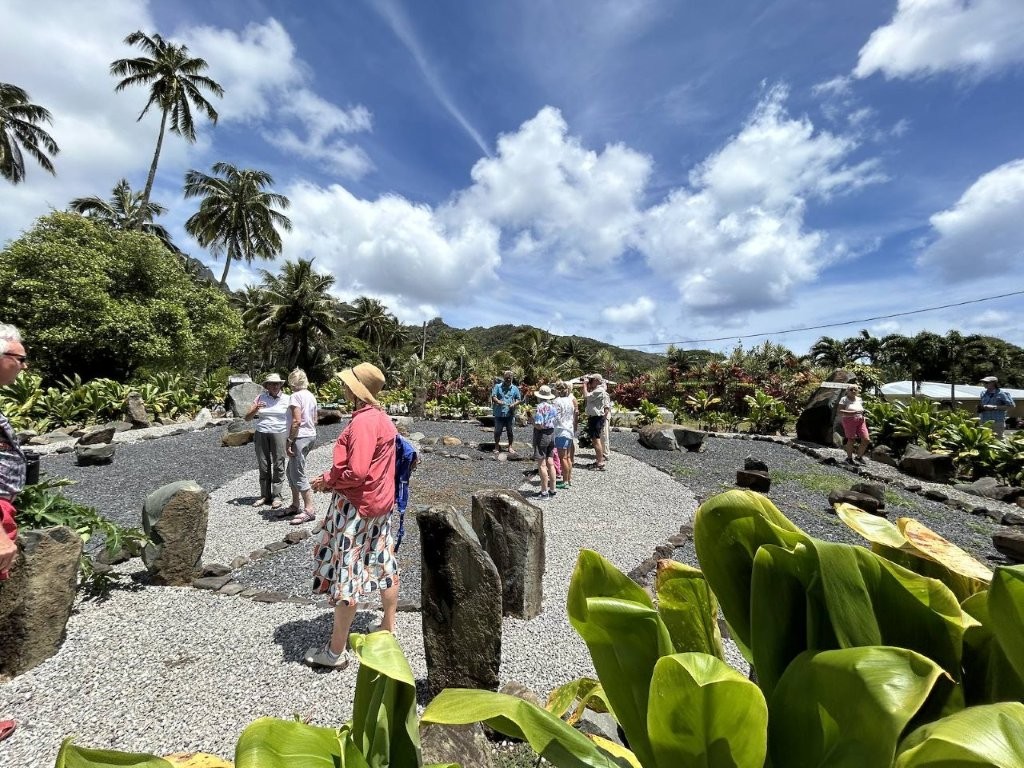
Eventually we saw land, disembarked and had a tour of Rarotonga. This is the largest of the Cook Islands, with almost three quarters of the poplution living there. We had a drive around the island, seeing the various villages and stopping to sample the local fruits. We visited a marae, a sacred site where our guide was allowed to walk around but we had to stay on the pale parts of the gravel.
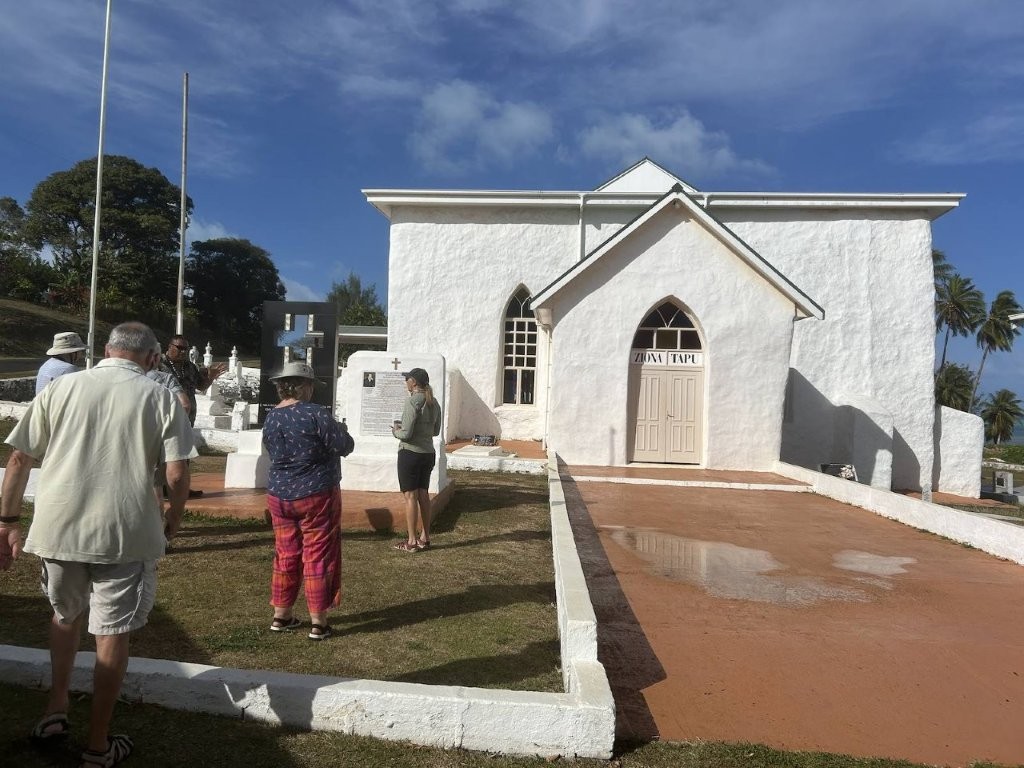
Then onto Aitutaki, with the oldest church in the country, built by two London Missionary Society |(LMS) teachers who stayed when the main mission left.
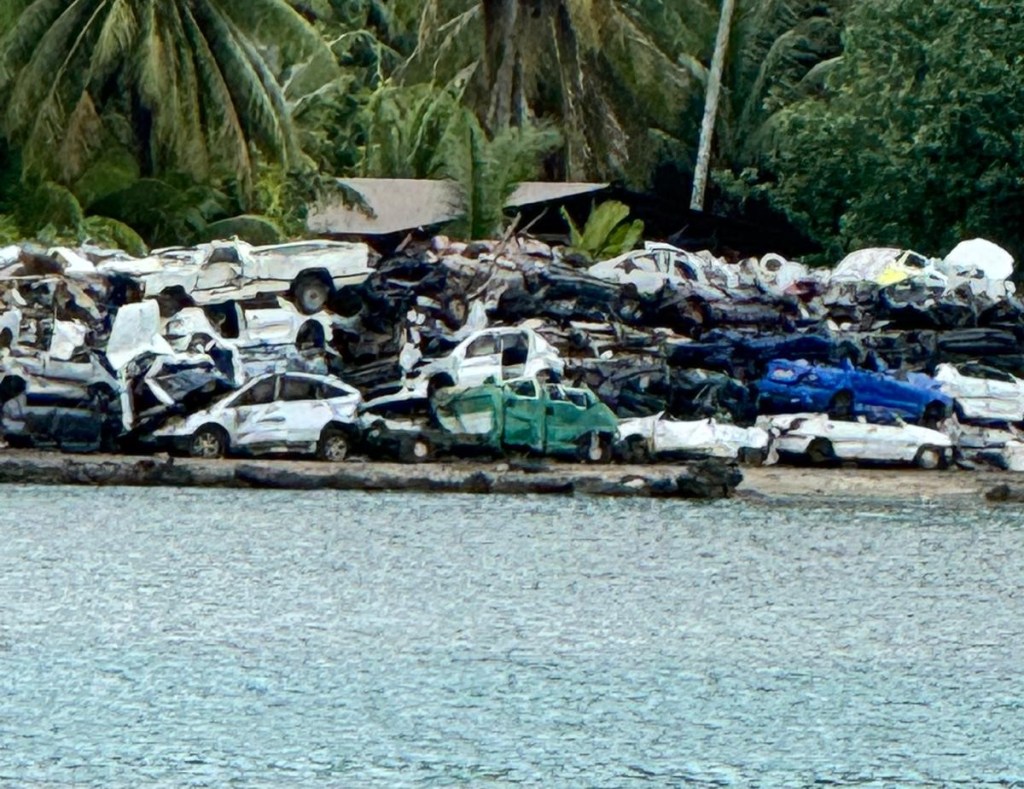
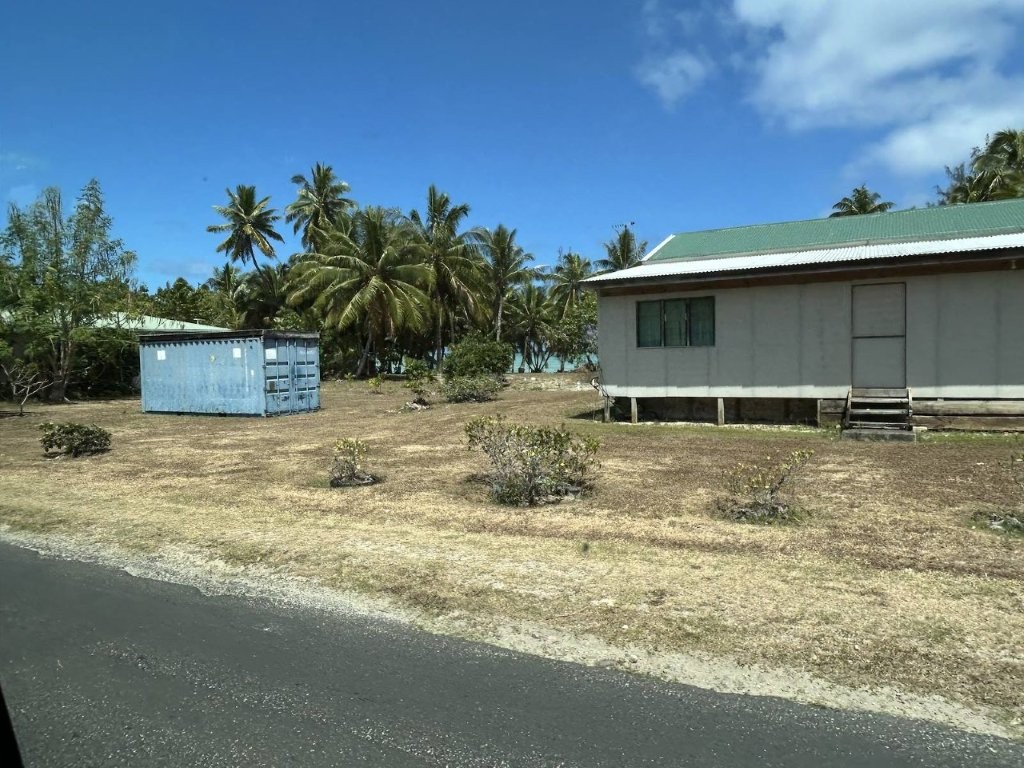
On many of the islands were heaps of old cars. We found out that there is a crusher that travels from island to island, crushing them prior to transport to New Zealand for disposal. You need to declare it to the government if you want the car removed: many are not declared as they are kept for spare parts. Additionally, many houses seem to have containers in their yard. This is how the building materials are delivered from New Zealand. They say it’s not economical to send them back empty.
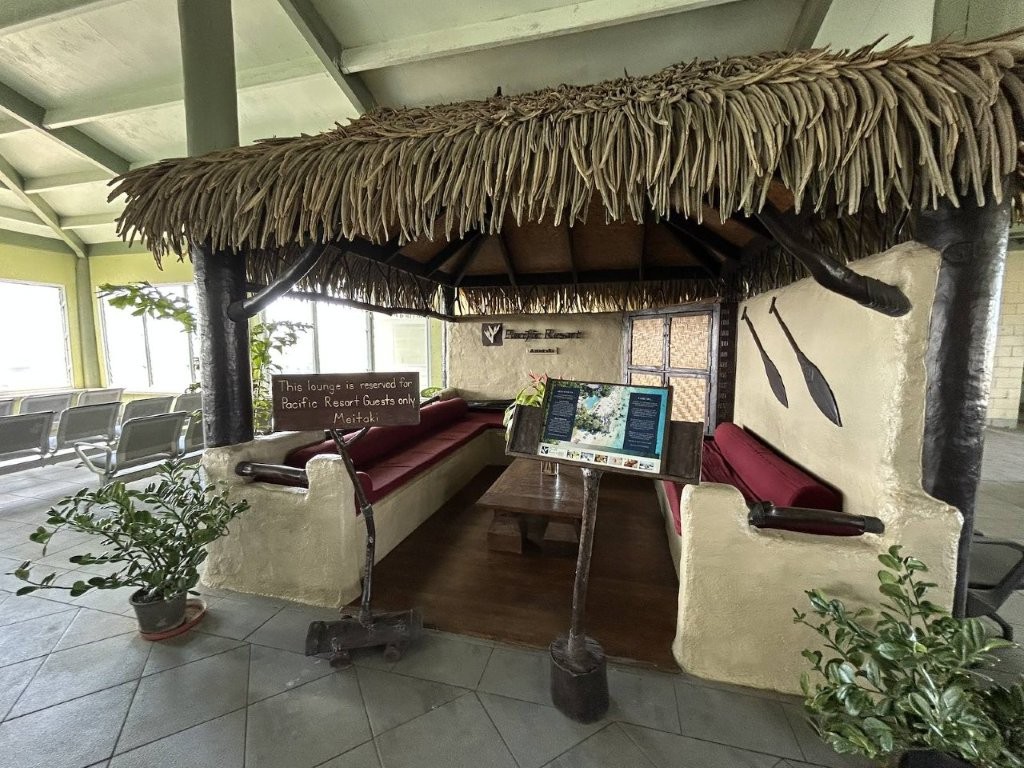
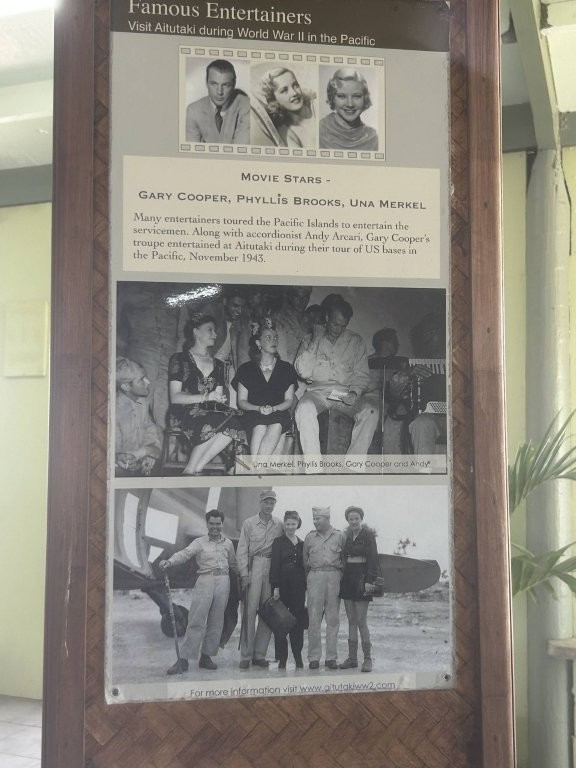
We stopped at the airport for a quick comfort break. I don’t know how many planes a day land here, but there were plenty of chickens on the runway. The airport had been used by New Zealand and American forces during the Second World War.
We then left the Cook Islands, with another day at sea, for French Polynesia: Bora Bora and Tahiti. I have to confess that we were not overly impressed with Bora Bora. It’s a great place to go if you’re on honeymoon and only want to stay in one place and soak up the sun, in one of the purpose-built resorts, single buildings on stilts with a pool each. These were not on the island itself but across the lagoon, you had to get there by boat. On the island proper were two abandoned hotels. The airport was also across the lagoon, so to fly in or out you had another boat trip.
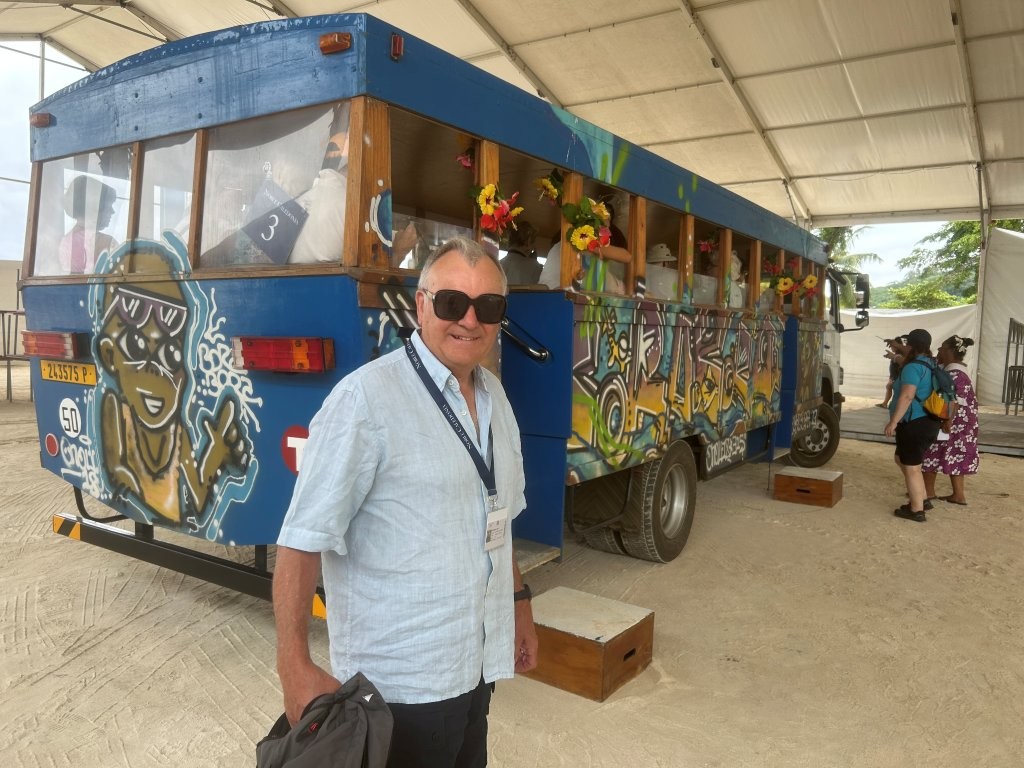
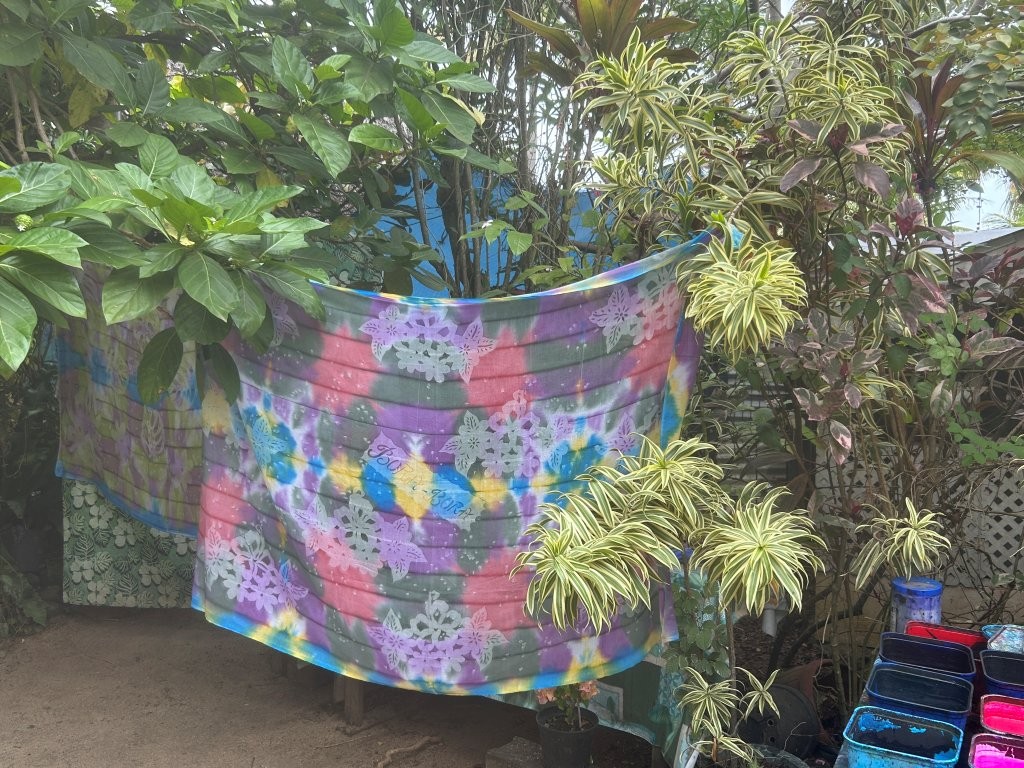
Our trip was in a fancy party truck. We stopped for some fresh fruit (mango, coconut, bananas) and a wander around stalls selling parau or sarongs. JD bought a fancy shirt for the Captain’s cocktails and Chef’s Special Dinner that night.
Onto our final full day. On Ra’iatea we had another island trip in school trucks. Ours was so low you had to crouch (obviously intended for primary school kids). There were narrow benches to sit on with our backs to the windows, so it was difficult to see the views but probably great for keeping the kids under control.
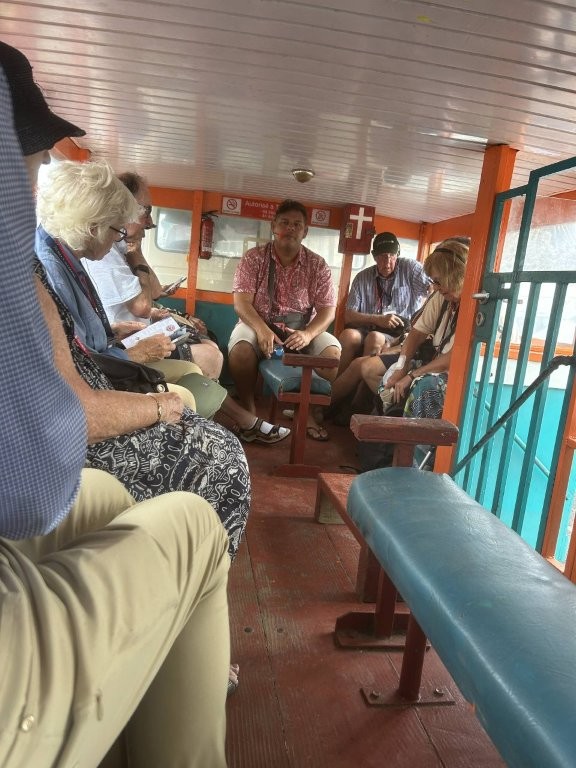
Our first stop was the Botanical Gardens, beautiful to explore with running water through them, but unfortunately not enough time to really appreciate it all. Then onto the Unesco site of the Marae Taputapuatea, a huge open area on the ocean with two Marae. One was large and dated back hundreds of years, dedicated to Oro, a bloodthirsty god demanding human sacrifices.
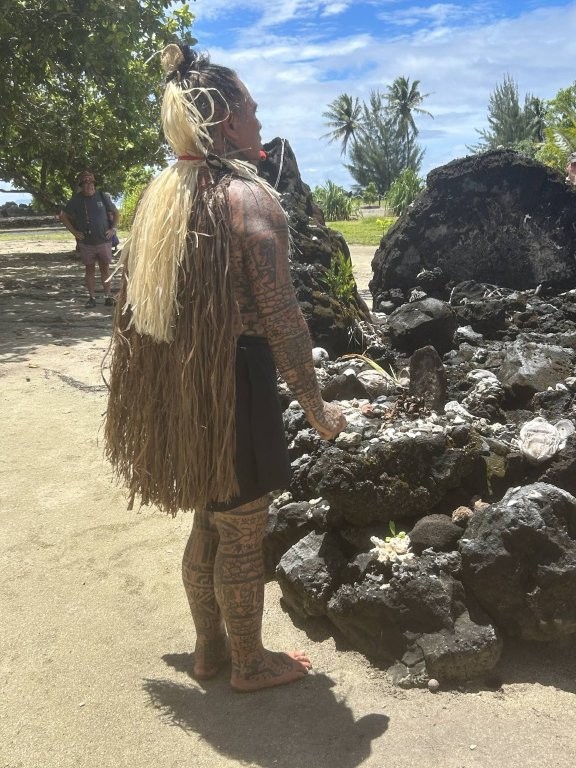
The other had been built of bits of reef in 2016 by locals, including our guide, a master tattooist. He guided us around the area and gave us a lot of details (some of which were possibly exaggerated) including the fact that our brains should be cleansed by walking around the site. It was so peaceful maybe there was some truth to his claims. Back to the trucks with a break for some fruit: for once, no coconut.
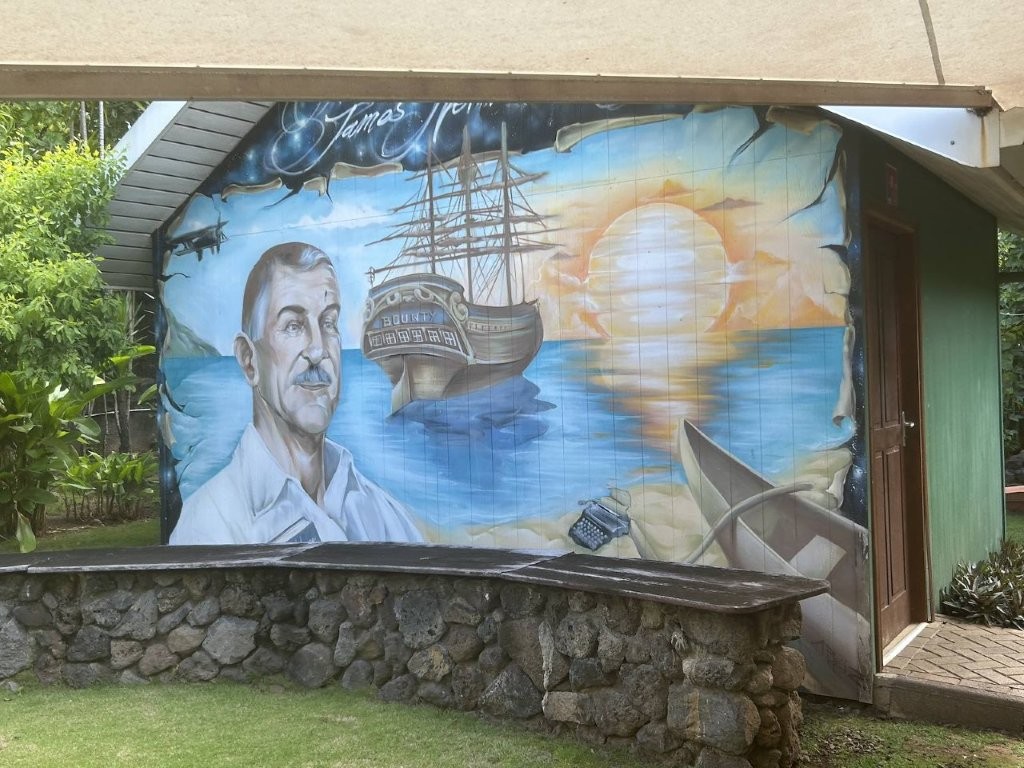
We docked in Pape’ete on Tahiti and packed up, had our passports returned, paid our bills etc. After lunch on board, we went on our final tour to the James Norman Hall Museum. He was a fascinating character, an American who managed to serve in the British and American armies in World War One. He settled in Tahiti and wrote the book Mutiny on the Bounty. I’m assuming you all know the background, Captain Bligh and Fletcher Christian etc., otherwise this Post is going to get even longer. If not, check the second link below.
https://roadstothegreatwar-ww1.blogspot.com/2017/01/remembering-veteran-james-norman-hall.html
https://www.rmg.co.uk/stories/maritime-history/mutiny-on-bounty
Tahiti is famous for its black beaches, due to the volcanic nature of the sand, but trying to take a photo just made it look like mud. We also called at a famous waterfall but as you had to climb up a great many steps (and down again) I decided that I’ve seen enough waterfalls in my life.
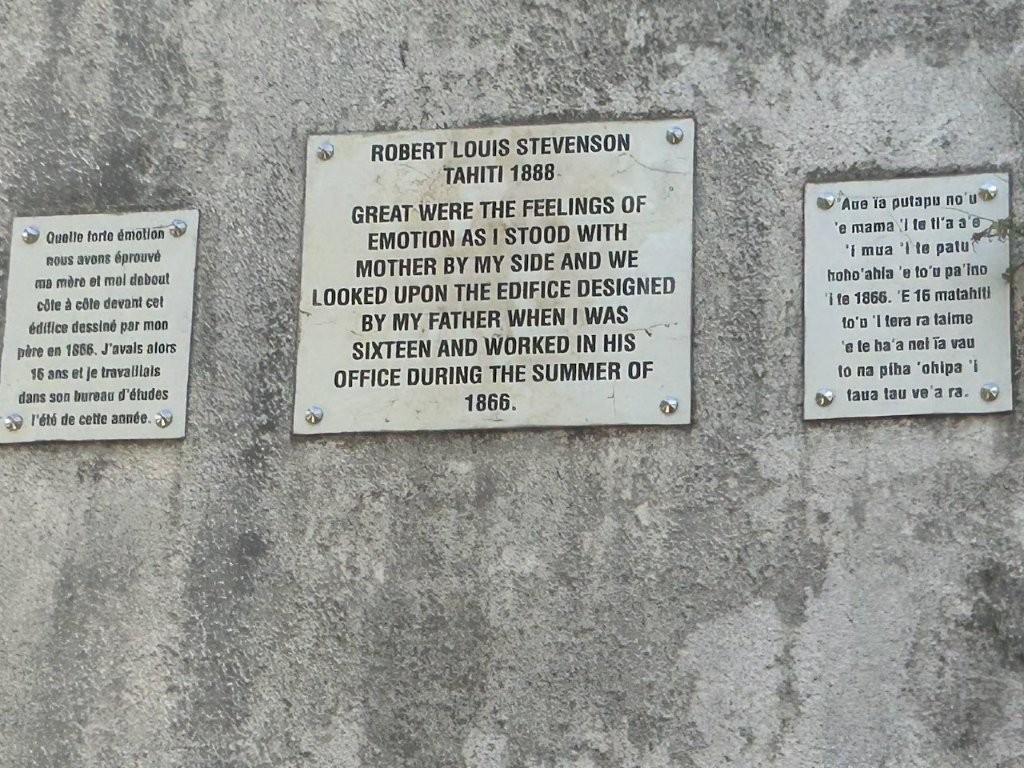
Robert Louis Stevenson’s father designed the lighthouse on Venus Point (named because Cook in 1769 watched the transit of Venus across the sun). There’s a plaque on it showing RLS’s input.
https://www.moanavoyages.com/engb/blog/the-point-venus-and-its-lighthouse
Our flight home didn’t take off until just before midnight, so we had a last meal with our new friends before heading off to the airport. When we arrived in LA, JD found out his specs were missing. We looked everywhere we could but gave up in the end and called over one of the crew. He took apart our seats: they had somehow wormed their way to the far side of my seat. We now know why they tell us to call someone if we’ve lost a phone down the side of the seat. On the flight menu from LA back home were coconut dishes, giving us the chance for a last memory of the South Pacific.
Do you want the answers to the puzzles?
(A) We arrived in Fiji on Monday 0600 local time, which I calculate to be (possibly) Sunday 1700 UK time.
(B) We arrived at Heathrow Tuesday at 1005.
(C) Who knows?
If you cannot get these times to work, remember that we crossed the International Date Line a few times. If it was only once in each direction, it felt like a lot more.