A word of thanks to one of my Welsh-speaking readers. If you look at the comments for the last Post, the epitaph to Sam has been put into Welsh. I still don’t know how many syllables it is, and (possibly being South vs North Walian) there are slight differences between this and the gravestone, but we’ll not quibble over that. It’s great to have an interactive Blog!
Back to what looks like a mammoth trip to Portmeirion and surrounding area.
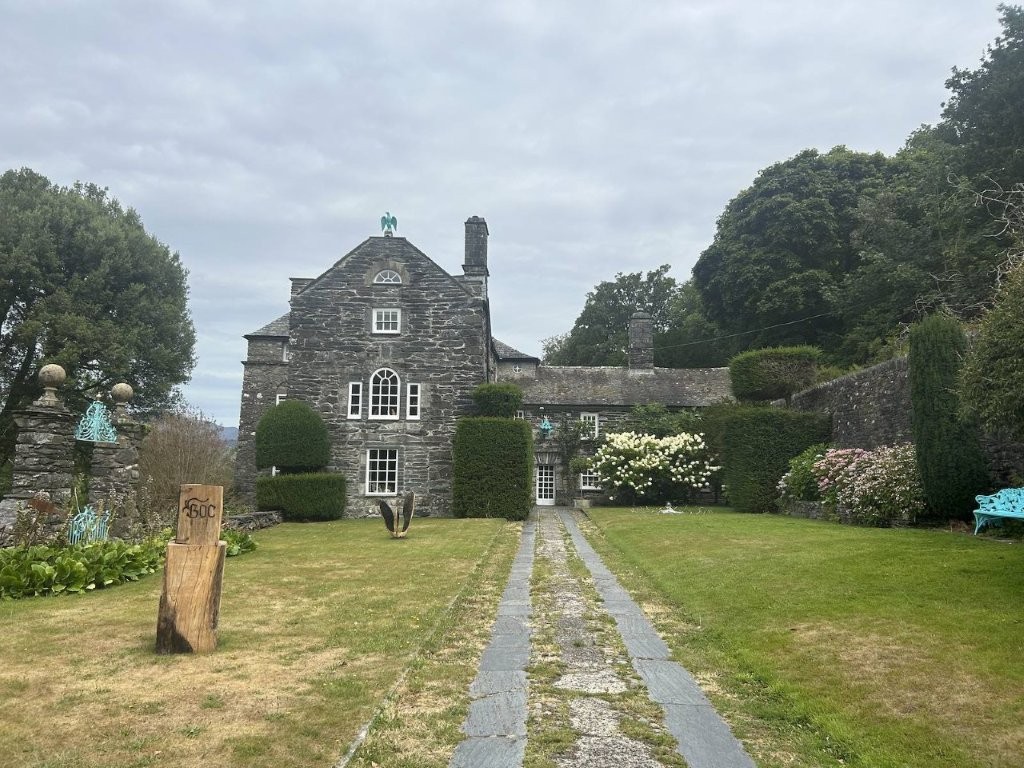
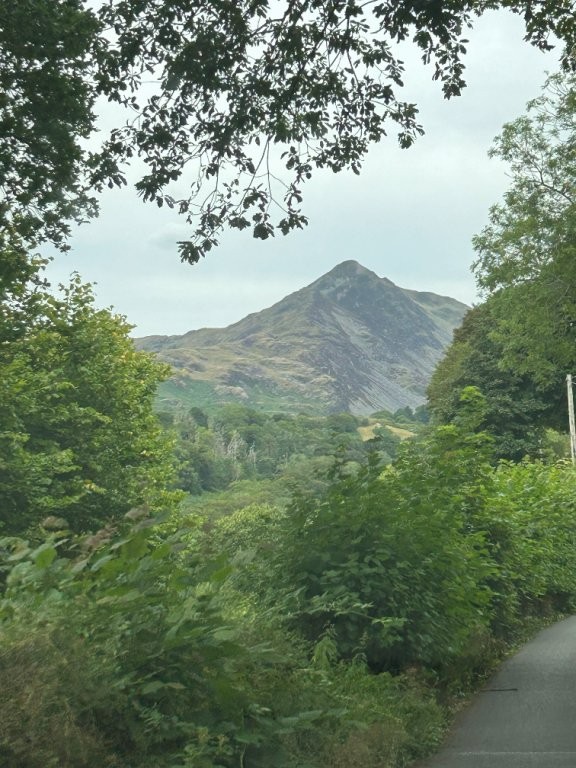
On Sunday we visited Plas Brondanw, which as I mentioned, was given to Clough as a 25th birthday present. I can’t remember that far back, but I’m sure I wasn’t given a house for my 25th. To add to this, for his wedding present, Clough asked his fellow officers to give him a ‘ruined outlook tower’ in the grounds, which is still there. He made sure he had a view of Yr Wyddfa (Snowdon) from his bedroom. I bought a guidebook so I could tell you more, but when I got it home and opened it, I had somehow picked up the Welsh version. Maybe once I’ve mastered Mandarin (ha) I’ll go onto my mother’s mother tongue.
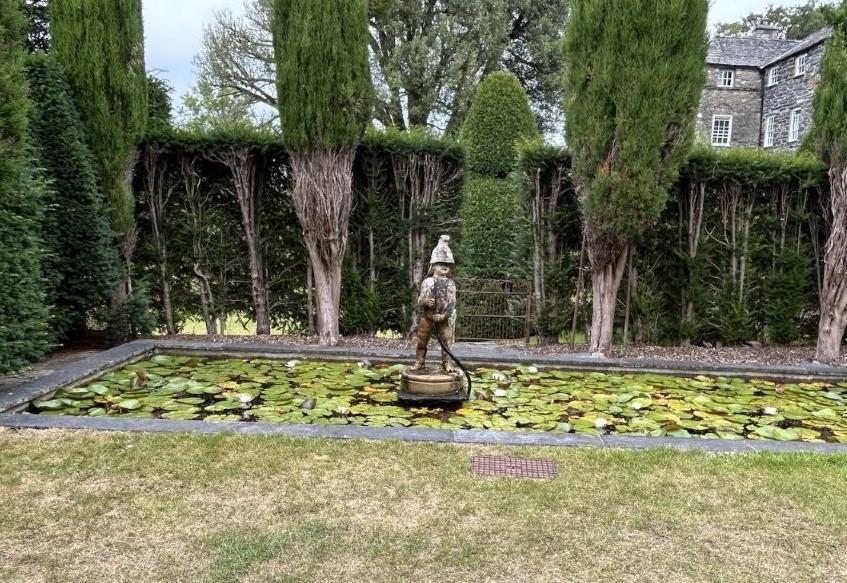
During World War Two, Liverpudlian schoolchildren were evacuated there. It must have been either idyllic or scary for them, certainly alien. In December 1951 a chimney caught fire and the house burnt down, with only the three-foot thick stone walls remaining. Over the next two years it was rebuilt from materials salvaged from elsewhere (sounds familiar): tramway lines from the local slate quarries and roof timbers and slates from an old school. I thought this fountain rather cute until I read the history, I now wonder if it’s a grim reminder.
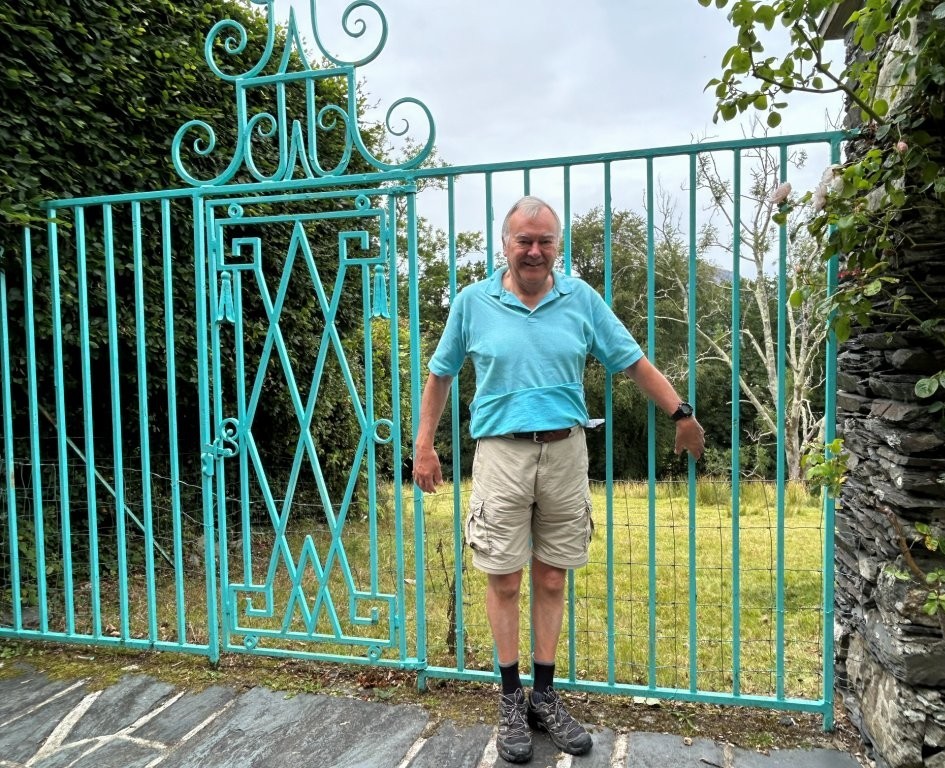
Throughout the estate, the ironwork is all painted a certain shade of blue/green (teal?) known as Portmeirion Blue-Green and apparently reserved for the estate. When we visited Plas Brondanw, JD happened to be wearing one of his favourite polo shirts that was an exact match. Luckily, no one mistook him for a groundsman and asked about the plants.
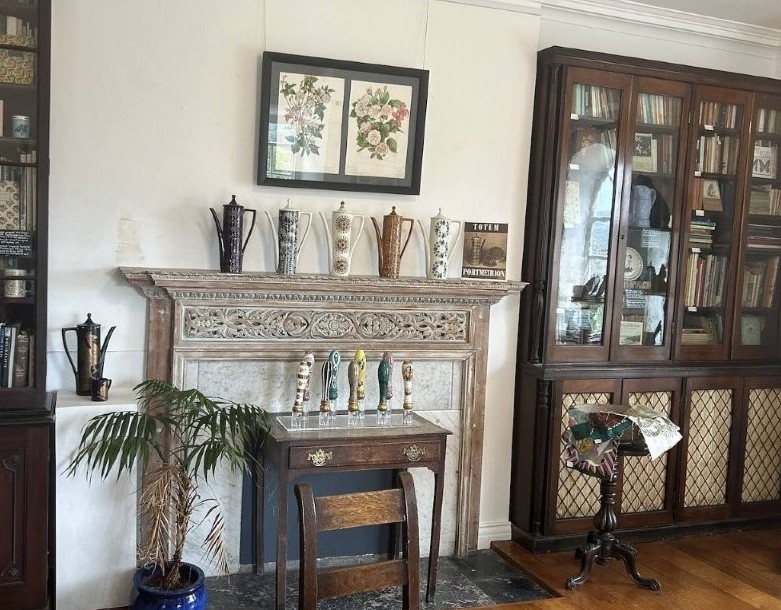
Portmeirion Pottery was started in the early 1960’s by Susan Williams-Ellis and her husband Euan, with the aim of giving people something pretty and useful, after the privations of the war. One of the early works was to take apothecary jars from Kirkhams Ltd of Stoke (a pottery they later bought) and create the iconic Totem coffee pots by elongating them and adding a handle and spout.
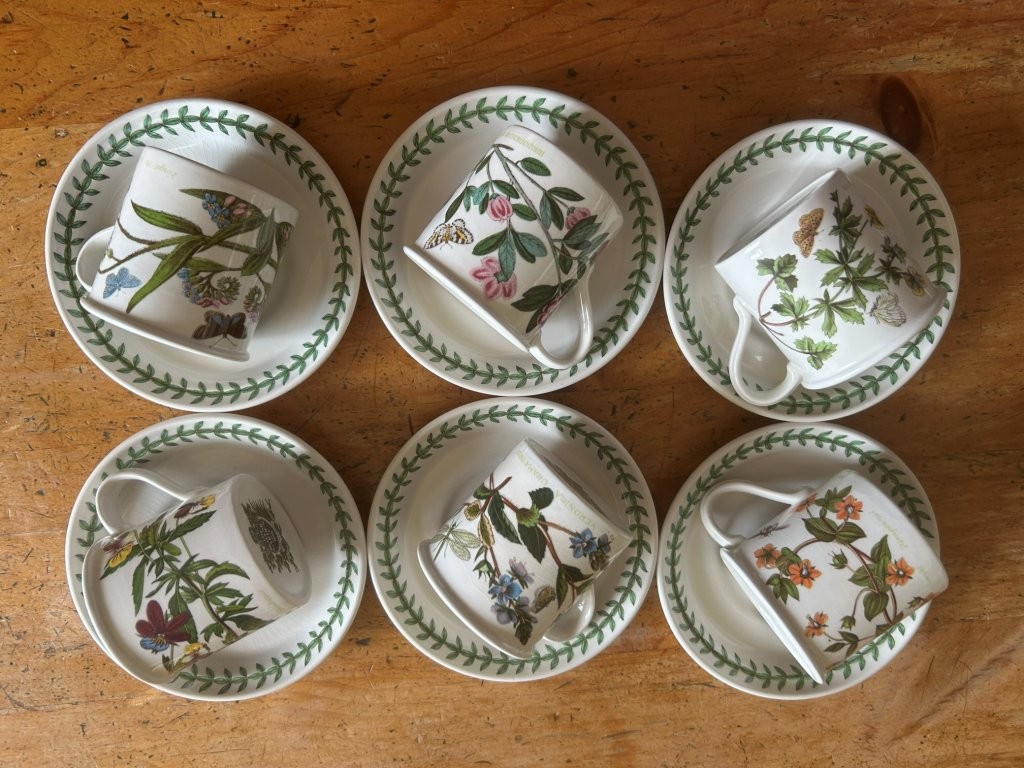
In 1972 they introduced a range that I’m sure needs no introduction, still going strong. You can buy it at the Pottery shop in Portmeirion, although they didn’t seem to have any replacements for me (we have a spare saucer).
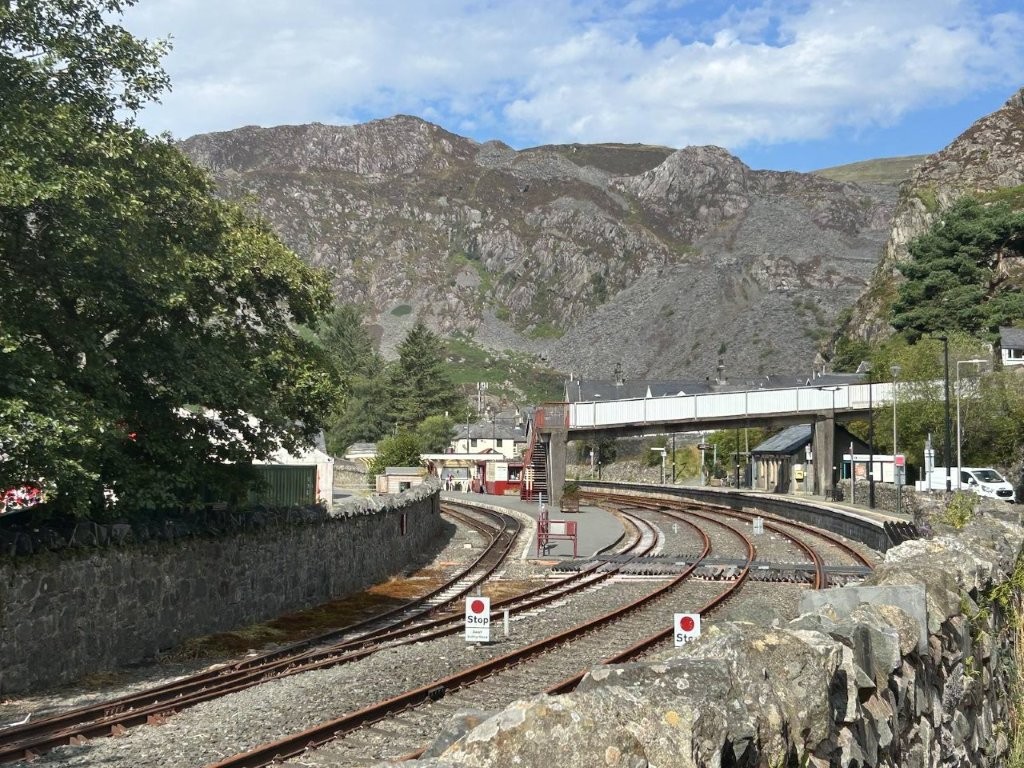
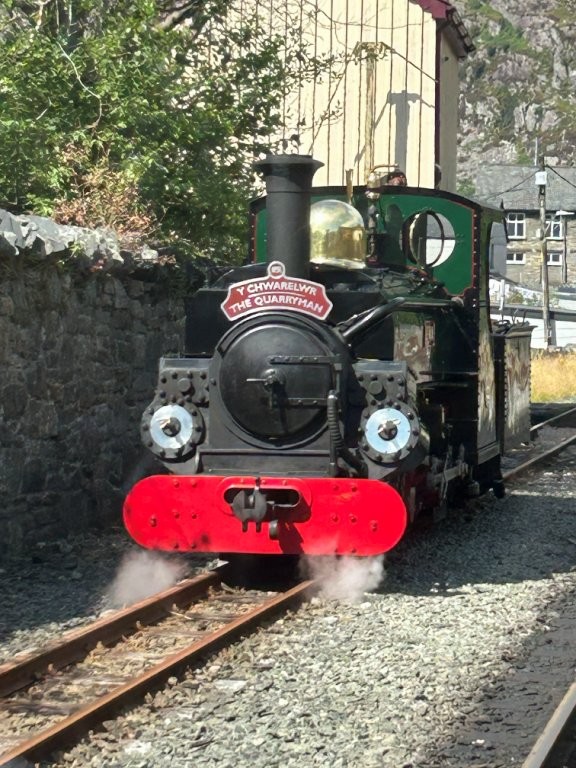
The next day was our anniversary. What could be more romantic than a ride on the Ffestiniog and Welsh Highland Railway, from Blaenau Ffestiniog to Porthmadog. Maybe not everyone’s idea of romance, but a steam train does evoke a certain glamour.
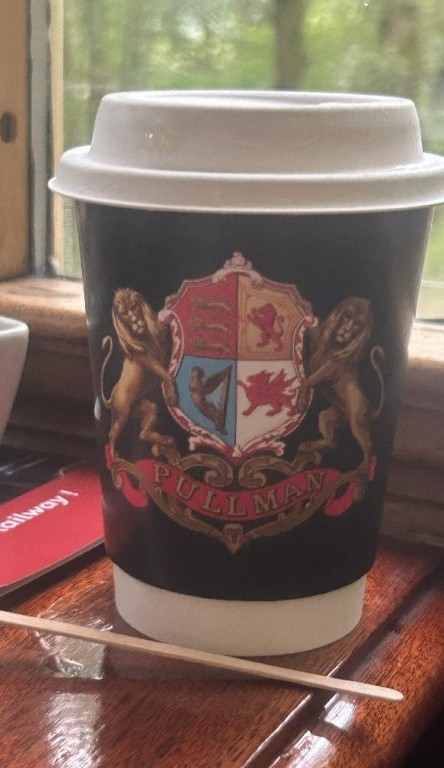
We travelled first class, naturally, and I’m glad to say that even the coffee cups were special.
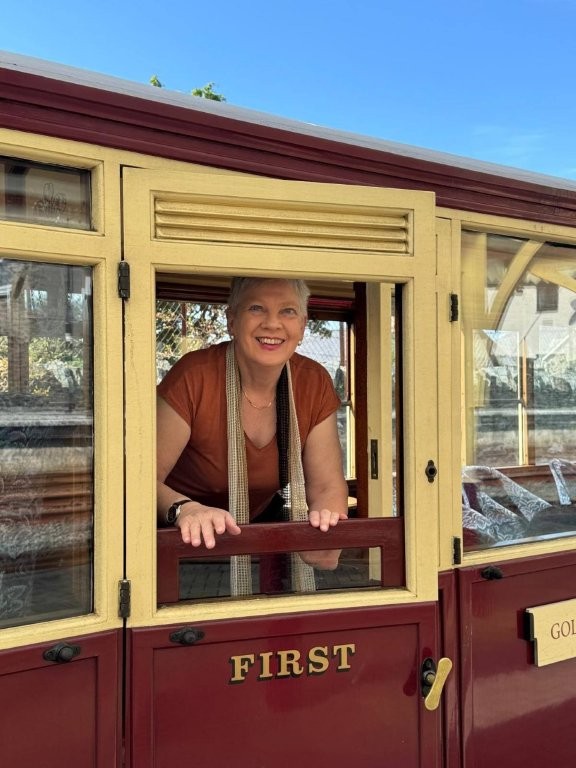
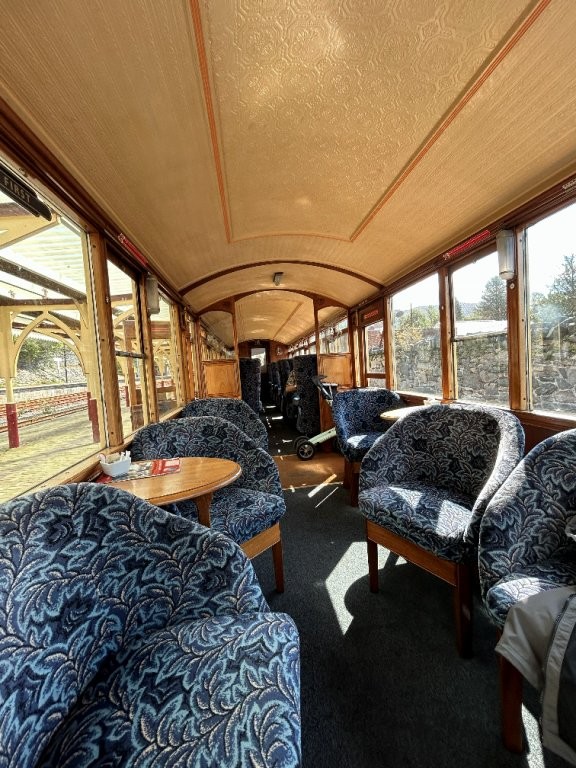
I have to confess that the atmosphere was slightly marred by a young American who knew everything there was to know about steam engines (fair enough), but was also obsessed with the fact that one of the engines had gone off the tracks. He wanted to know exactly where, why, how etc etc and kept asking what were the odds of it happening to us. If you too are into rail disasters, here’s the government report:
https://www.gov.uk/raib-reports/derailment-of-a-passenger-train-on-the-ffestiniog-railway
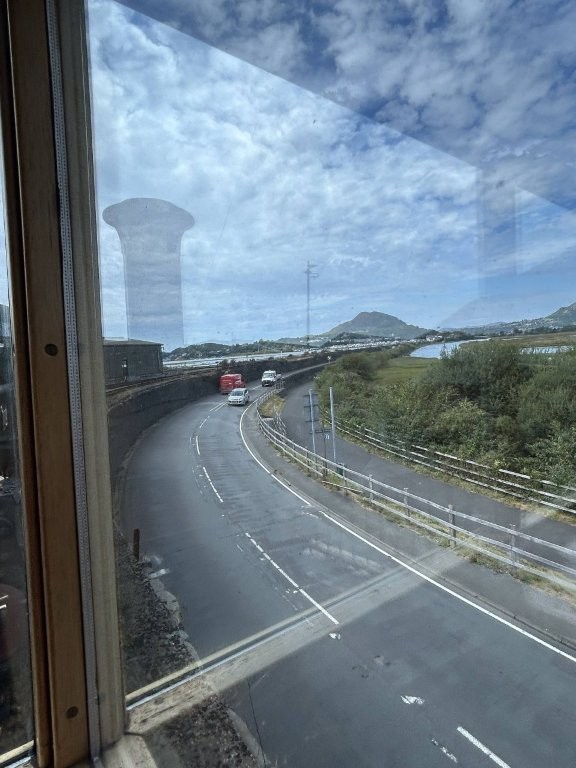
Steam trains were introduced on this line with special narrow-gauge lines in 1863, replacing the horse-drawn trains of earlier. As stated last time, Porthmadog Harbour was formed in the early 1800’s, when William Alexander Madocks built a mile-long embankment, the Cob, allowing the marshes to be drained for agricultural use. He sounds like quite a philanthropist, as he also had the ‘model’ town of Tremadog built, with a square, town hall, theatre, etc. Slate from the Ffestiniog Valley quarries was shipped from Porthmadog around the world. There was a gradient for most of the way down from the quarries, so originally the trucks travelled under their own weight down their own momentum. Horses travelled at the back, then were harnessed up to drag the boxes along the straight to the wharves and back up to the quarries for the next load.
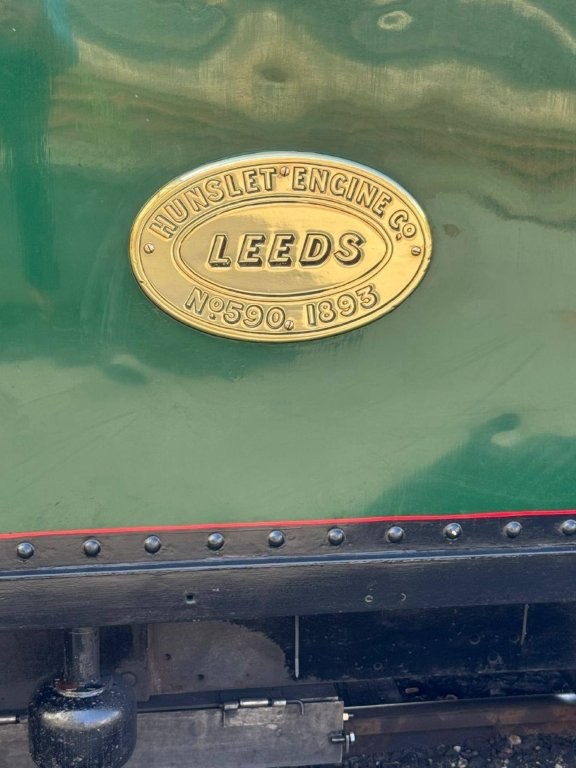
I had a bit of a thrill when I saw a plaque on the engine. As a child, we lived in Hunslet for a short while, see the picture of me in Post 180 and a link to Hunslet. Well, I wasn’t expecting to come across it in North Wales, although this makes reference to quarry engines so I should have known.
https://www.gracesguide.co.uk/Hunslet_Engine_Co
If I ever need to hire a locomotive, I know where to go.
https://www.hunsletengine.co.uk/
You have been patiently awaiting the explanation for the two Post titles, or impatiently awaiting my discussion of The Prisoner. This was a cult TV series, of only 17 episodes, shown on UK television in 1967 and 1968. It starred Patrick McGoohan (1928 to 2009), a famous actor, writer, director and producer in the 1950’s and ‘60’s. He was born in the USA but brought up in the UK and Ireland (hence me not knowing until now that he was American, he sounded British). He famously turned down the role of James Bond as he did not approve of his promiscuity.
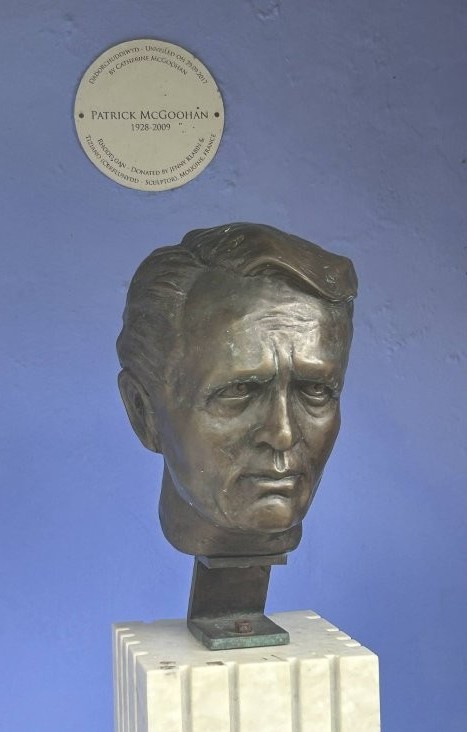
I remember him as Danger Man, although I cannot believe I was watching it at the tender age of five, when it first aired. In this he played John Drake, a NATO operative, with a much more wholesome lifestyle than Bond. Just thinking about it makes me want to watch it and see if it’s aged well. Looking at the full cast list (some in only one episode) is a call list of the actors in my youth. I’ve spotted at least two from Dr Who.
https://www.imdb.com/title/tt0053496/
Danger Man was (affectionately) parodied as the cartoon Danger Mouse in 1981, also worth watching. It has its own YouTube channel. As does Danger Man. That’s my evening sorted.
https://www.youtube.com/user/dangermouse
An interesting bit of trivia: the first episode of Danger Man was filmed at Portmeirion. Now that I must find. The venue of The Prisoner was not made public until the last episode, but the visitor numbers to Portmeirion apparently almost doubled overnight. So, we return to my original topic of conversation.
https://portmeirion.wales/about/the-prisoner
Patrick McGoohan was Number Six in the series, which has its own dedicated channel on the televisions in the hotel rooms. Unfortunately, when we tried to watch it, it seemed to be on a constant loop and we started halfway through episode three, not ideal if you have no clue what is happening. This is not helped by the fact that there seems to be some disagreement among ‘experts’ on the exact running order of the 17 episodes. I have the DVDs somewhere but am now unsure how to progress.
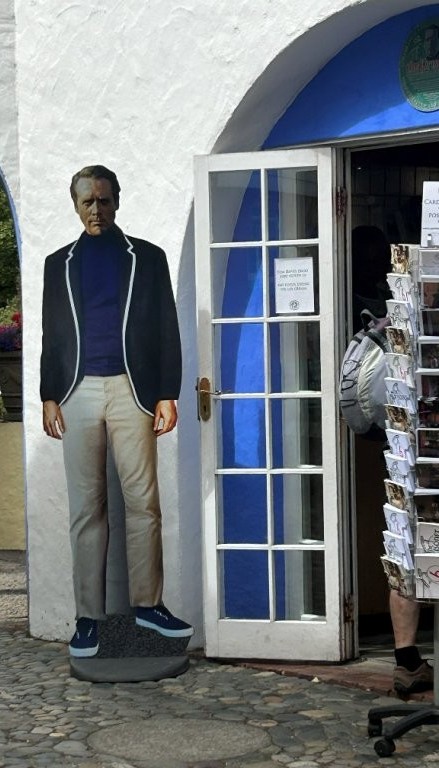
If you don’t know, in brief, an un-named secret agent resigns from his post, is gassed on his return home and awakes to find himself in this strange place, being quizzed on why he resigned. I don’t think we ever find out. The room in which he was captive is now a shop selling exclusively Prisoner items.
The series was co-created by Patrick McGoohan and at the time, the most expensive adventure action series. To fund the final four episodes, he took a part in the film Ice Station Zebra, based on the book by Alistair Maclean. I’ve probably got a copy somewhere.
The first fan club was set up in 1977 with the first fan convention. On the 50th anniversary, 2017, a permanent chess board was constructed on site.
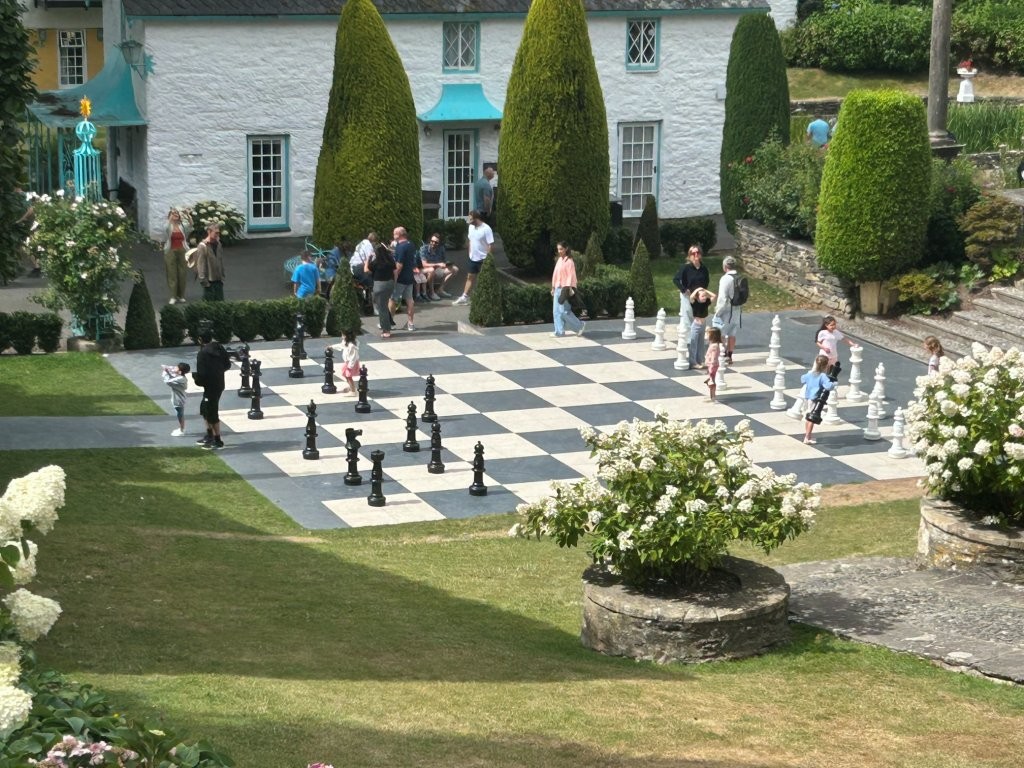
The Prisoner Appreciation Society is called Six of One, I’m not sure if it’s the original fan club or a more recent iteration. If you are really keen you probably know about it already, but if you want to dress up and join lots of like-minded people in Portmeirion for a few days, follow this link:
https://sixofone.co/convention
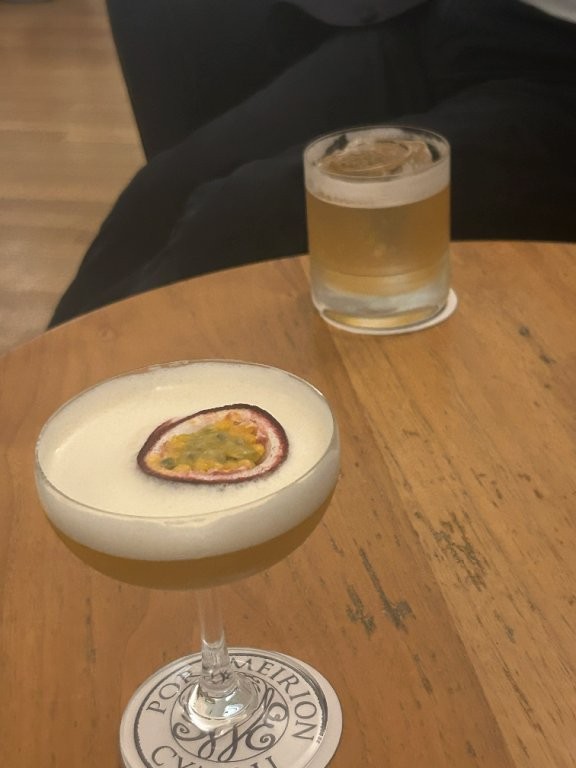
To end, a cocktail that I enjoyed so much I bought the ingredients: vodka, pineapple juice, passionfruit juice, butterscotch liqueur and vegan egg white substitute. I’ve not yet made it but when I get myself organised I’ll let you see my version.