
JD says I’ll be putting you off, calling the Last Post Part 1. It’s only because I want to show you so many photos that I’ve so many parts (I’m sure there’s a witty quote I could put here), there won’t be too many more. You might not believe it by the time you get to the end today, but I reduced the number of photos drastically as I’d got about 100 to show you.
It would take 14 hours to drive North-West from Shanghai to Xi’an. We arrived into a brand-new airport terminal after a three-hour flight, so new we were the first to use the baggage area. It worked perfectly. When excavating the area, they found thousands of statues etc and have a museum in the departures lounge showing some. Unfortunately, we didn’t fly out from Xi’an so missed seeing it. I don’t know if they are part of the same complex as the Terracotta Warriors but I don’t see why they wouldn’t be, they stretch for miles. There had been a sandstorm two days before we arrived then rain in the morning meant everything was very dirty. The weather has no respect for new buildings.

Xi’an was once the beginning (or end) of the Silk Road and the capital of what would become China (named after the Emperor Qin, who was responsible for the Terracotta Warriors). It was previously called Chang’An, the Eternal City.
https://en.unesco.org/silkroad/content/xian


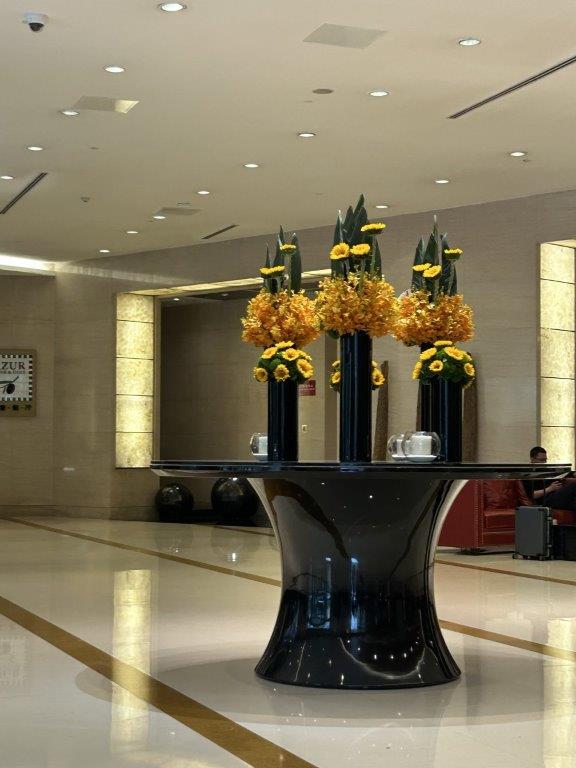
We arrived at the hotel to discover there were two Sofitels next to each other: you can see both above. Before checking in, JD and G went to check out the other one and decided to move over there, built in 1953 and called the People’s Grand Hotel.

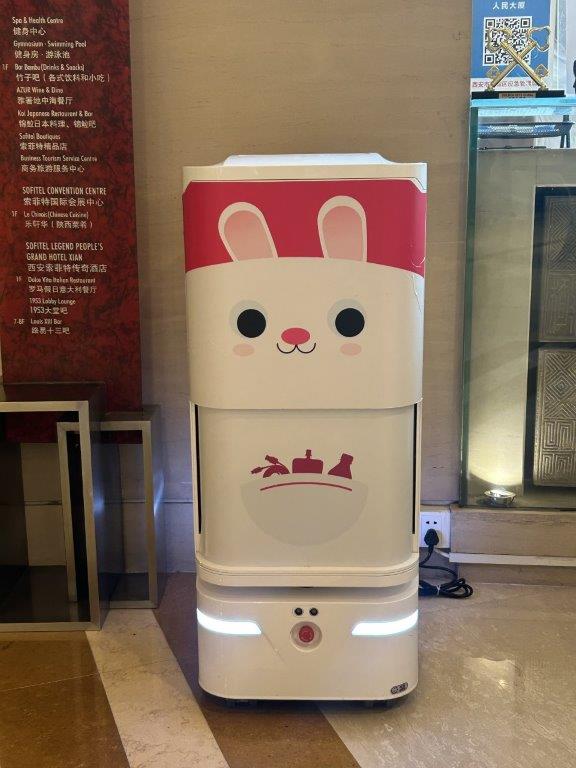
How could you not want to stay there? Our room had one of those infernal modern toilets. I am not going to install them at home. What happens when you have a power cut? While we were waiting for the two hotels to be compared, I spotted an odd thing in the lobby. A food delivery robot! So cute, I was tempted to order something just to have it arrive at my room and take delivery.
The next day a driver took us around the city then off to see the Terracotta Warriors. We went by the South city gate, very ornate as it was the main entrance to the old city. Like so many old cities it was walled, if you fancied you could walk or cycle all of the 15 km around. I declined but JD and George did part of it later in the week. I also missed the Big Wild Goose and Little Wild Goose Pagodas, ancient Buddhist temples. I don’t think any geese were involved in their construction.
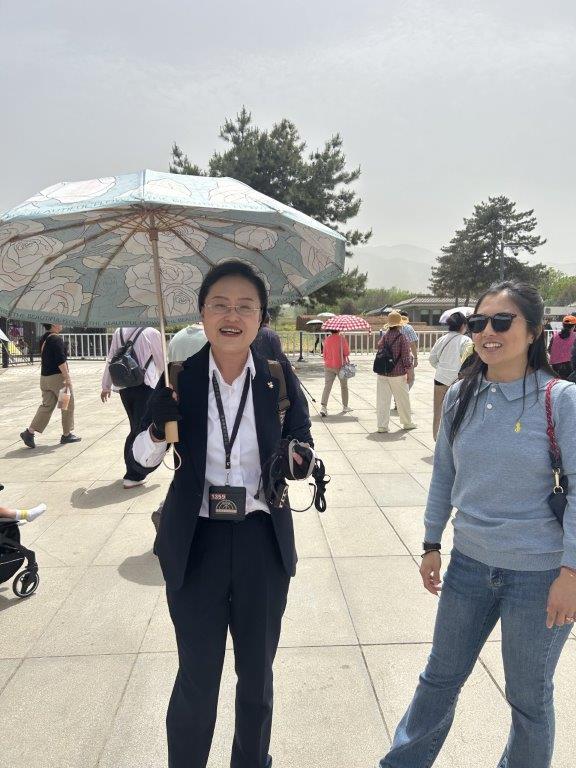
The main part of the day was spent at the Terracotta Warriors exhibition at the tomb of Emperor Qin. We had a very good guide to explain it to us. I noticed she had an umbrella and was wearing gloves: both to protect her from the sun. We saw other people wearing full face masks and hats with big brims and a large overhang at the back (there must be a word for that), again to keep the sun off. I find it interesting that we in the UK like to go and get a tan, considering it healthy, while some Chinese do their best to keep the sun away, and some countries use skin-lightening creams. Surely somewhere in the world must be the ‘perfect’ colour where no-one worries.
You’ll possibly have heard about the Terracotta Warriors, discovered in 1974 when a farmer was digging a well on his land and came across pottery and bronze items. I saw an exhibition in London in 2007 with my Goddaughter for her birthday treat. I only remember a handful of the soldiers but there were 17 I’m told.
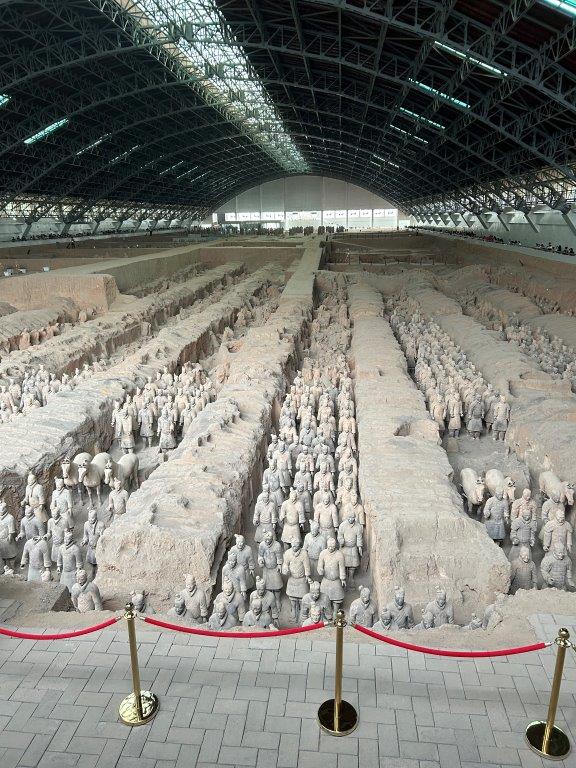
To see the real place is just incredible. If you look carefully at the photo above you can see the visitors lining the walkways above and get a sense of scale. It’s still being explored: I’m not sure how much they want to excavate. The tomb itself has not been opened. It contains a tonne of mercury (detected by modern non-invasive methods) which would cause havoc if exposed and is reported to be booby-trapped. As well as the warriors, acrobats and wrestlers found early on, they have uncovered musicians, animals and birds. A whole kingdom for the Emperor to rule after death. Before we got to the actual warriors, we saw the bronze carriage with horses that had been built for the Emperor in the afterlife. The reins had decayed but otherwise it was in perfect condition. (Further down you can see a horse being led, where the reins were made of silver and so survived).
https://www.thearchaeologist.org/blog/the-terracotta-army-guardians-of-chinas-first-emperor
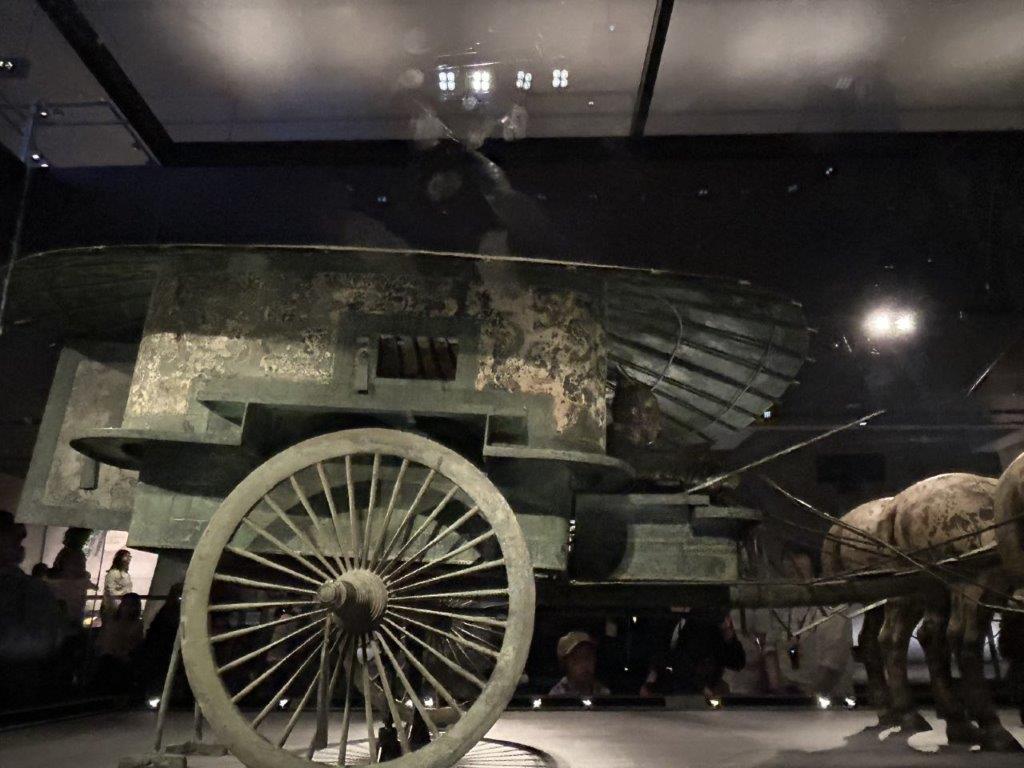
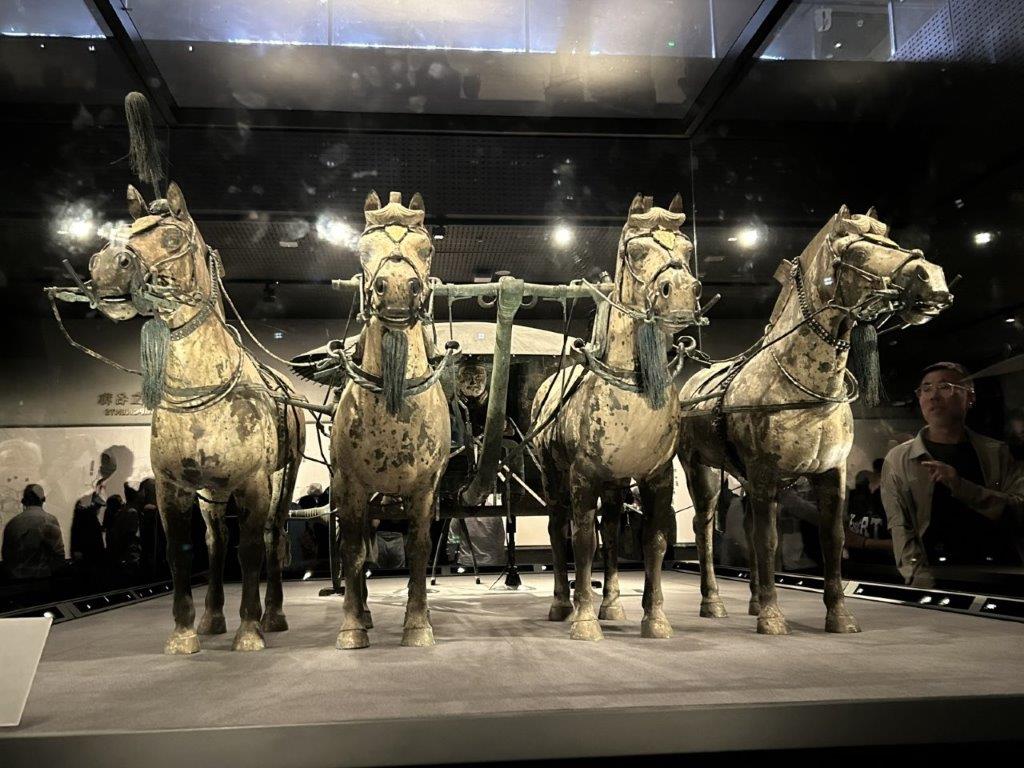
The whole site had originally had thatched roofs, which over time collapsed and crushed a number of the statues, as you can see. Restoration of each one can take three years or more: early restorations were not so sympathetic, but they have been kept to show the progression of such work. Equally, there had been tomb robbers in the earlier days, so although the soldiers look like they should be carrying weapons, only a few have been found.
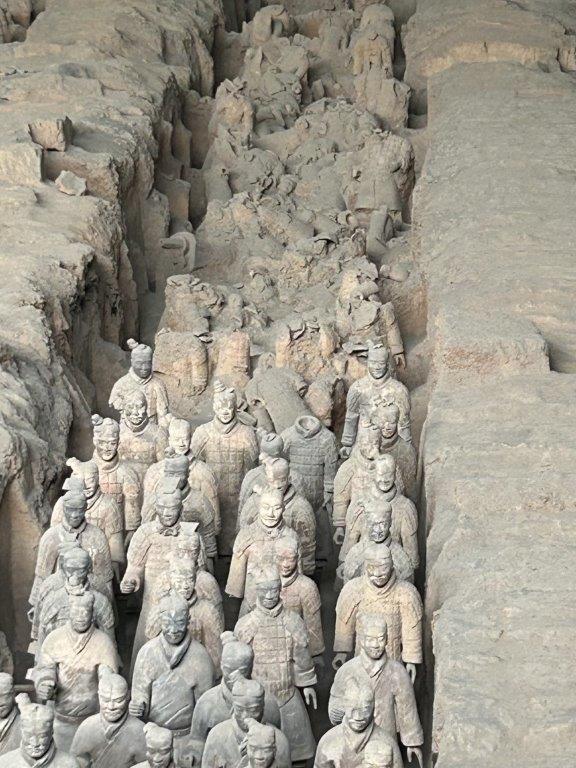

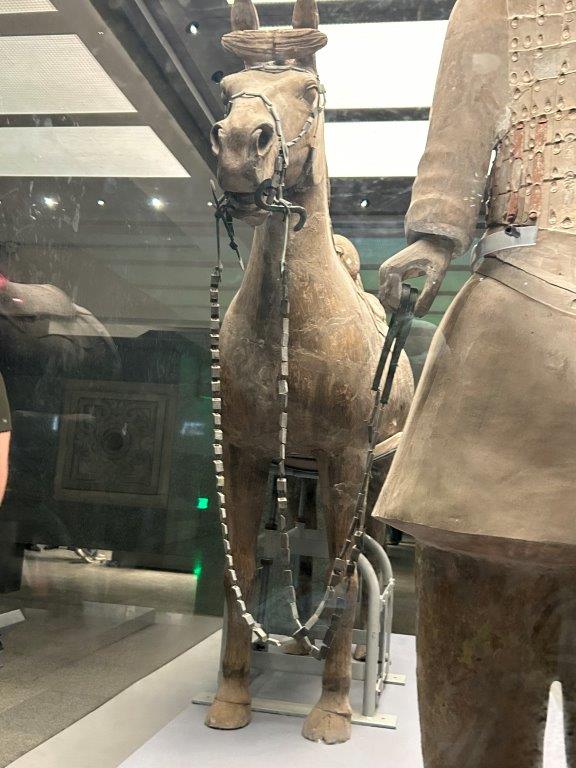
After an afternoon walking around the site (which is so big you go between parts in electric buses) we repaired to a Tang dynasty restaurant and dined on whole deep-fried chicken and other local delicacies.

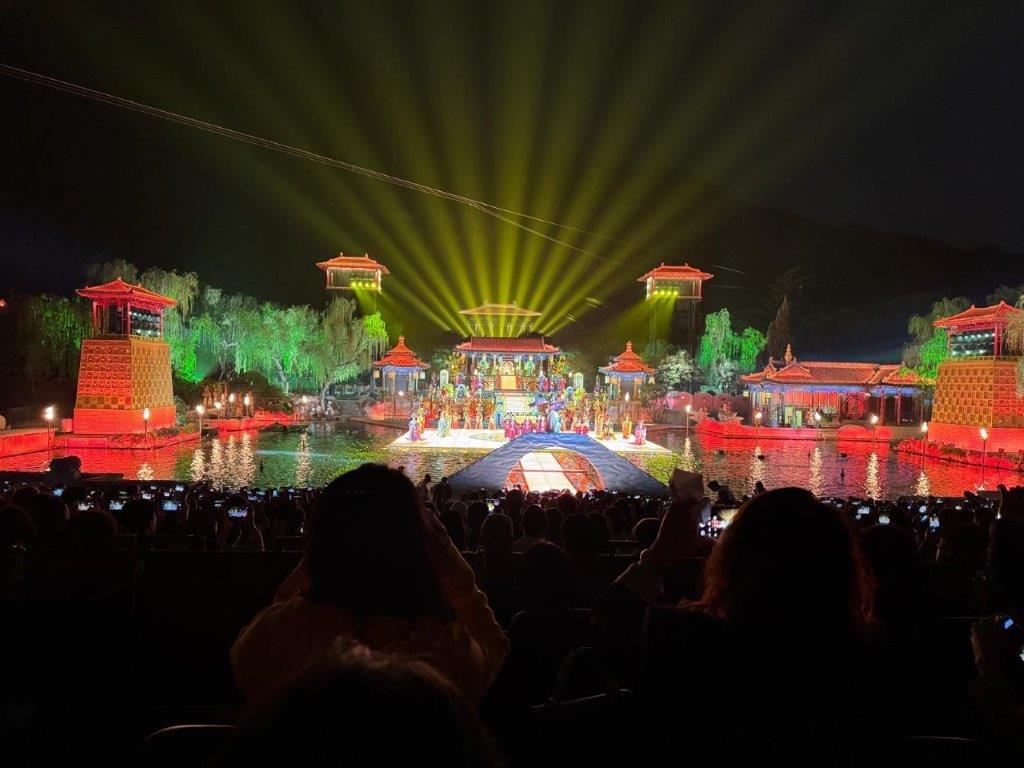
The day was not finished as we then strolled through the gardens of the hotel-restaurant past the hot springs, led by a man with a lantern, to our seats in a 3000-seat arena to watch a show. This was entitled The Song of Everlasting Sorrow, based on the tale of Emperor Xuanzong and his favourite concubine Yang Yuhuan. A spectacle well worth seeing, even though we could not understand the commentary. George gave us a very brief synopsis, enough to keep us going. Emperor meets girl, falls in love, neglects his Emperor-y duties, faces a rebellion, puts her to death for the good of the country, spends the rest of his life in mourning until they are re-united as a phoenix and dragon in heaven.
https://www.travelchinaguide.com/cityguides/xian/song-of-everlasting-sorrow.htm



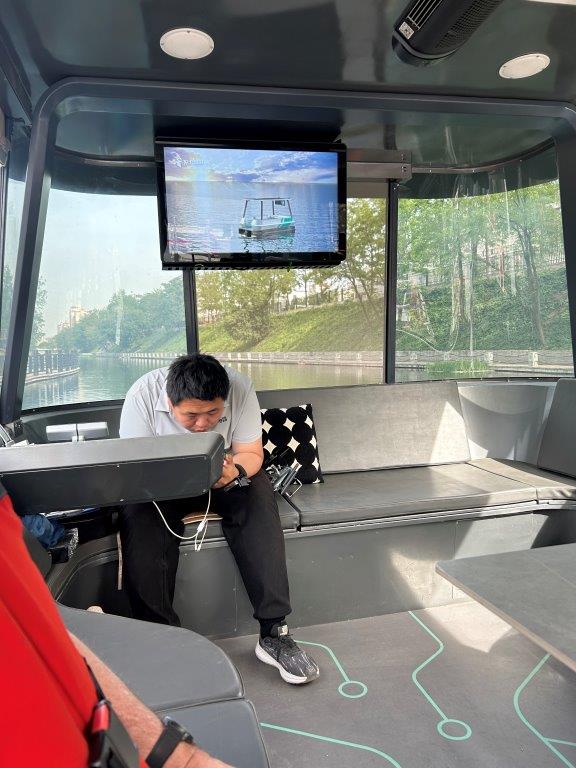
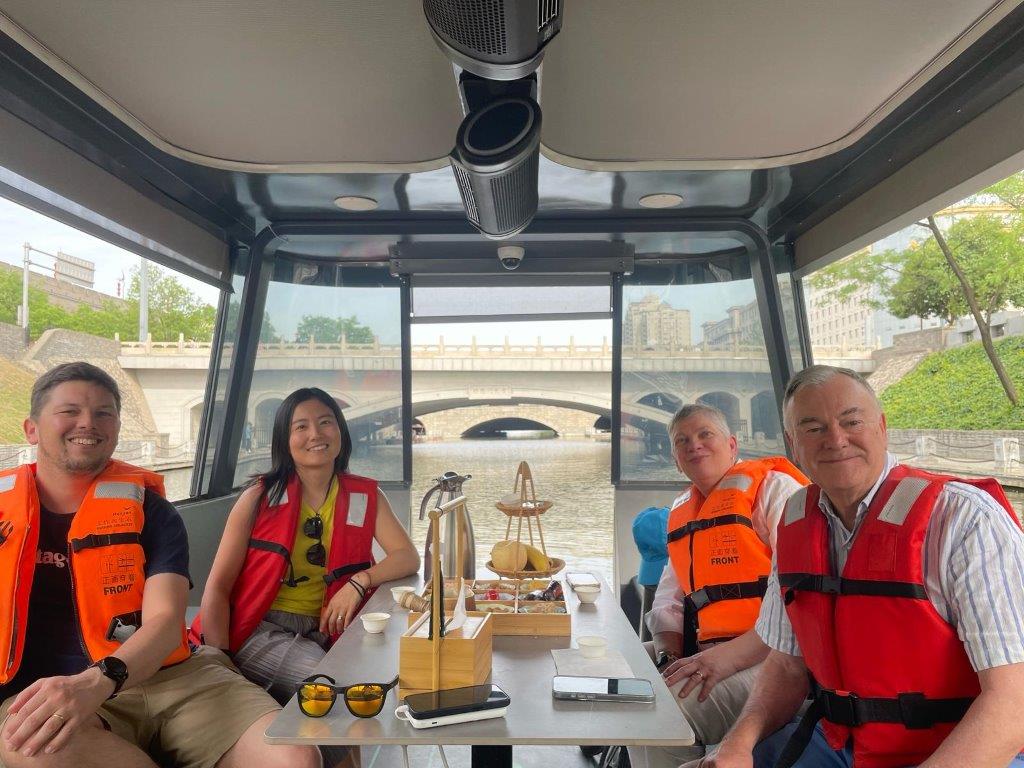
After all this excitement, the next day I relaxed by the hotel pool. Even though I had spent most of the previous day being pushed in a wheelchair (good exercise for the others) I felt tired and not inclined to walk or be pushed around for a second day. Y joined me as she’d been working all morning. By the afternoon we were ready to go out, so met JD and G (this was the day they Walked the Wall) by the moat and hired a boat. We understood it to be self-driving, but like the cars, it’s not yet trusted to look after itself. It couldn’t go very far but was fun anyway.
For George’s birthday we had planned to go up the mountain in a cable car, but the queue was reported to be two hours going up and longer coming down. (Plus a 40-minute bus ride after a 90-minute car journey. Each way).

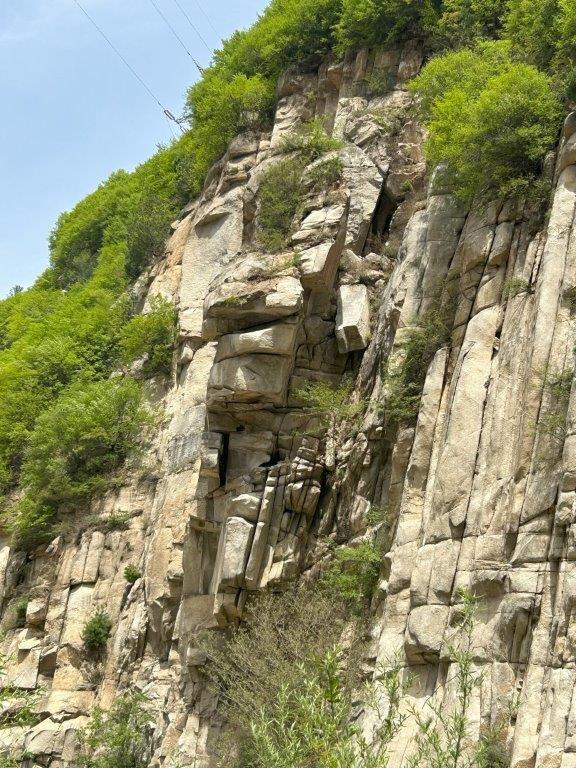
Instead, we asked the driver to take a route through a mountain gorge. At one point there was a lorry not quite crashed into the barrier with around 20 lorries lined up behind. We managed to squeeze through and continue our exploration.


Through the mountains, we came to a massive quarry. We worked out that it was probably mining molybdenum. Moving on, back towards Xi’an, we met a traffic jam in the middle of nowhere. G got out to investigate and told us there was a gate closed across the road. Shortly after, a water bowser and truck full of rubble passed us. When we were allowed through, they were being used to improve the road which went around a reservoir, either very dry or under construction.

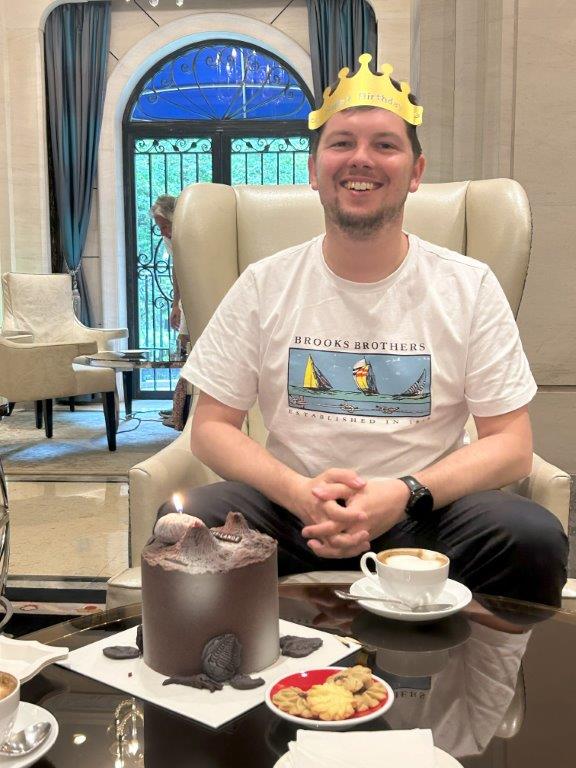
We returned to the hotel for much-needed coffee with chocolate birthday cake, very appropriately in the shape of a mountainous range with a volcano and fossils.
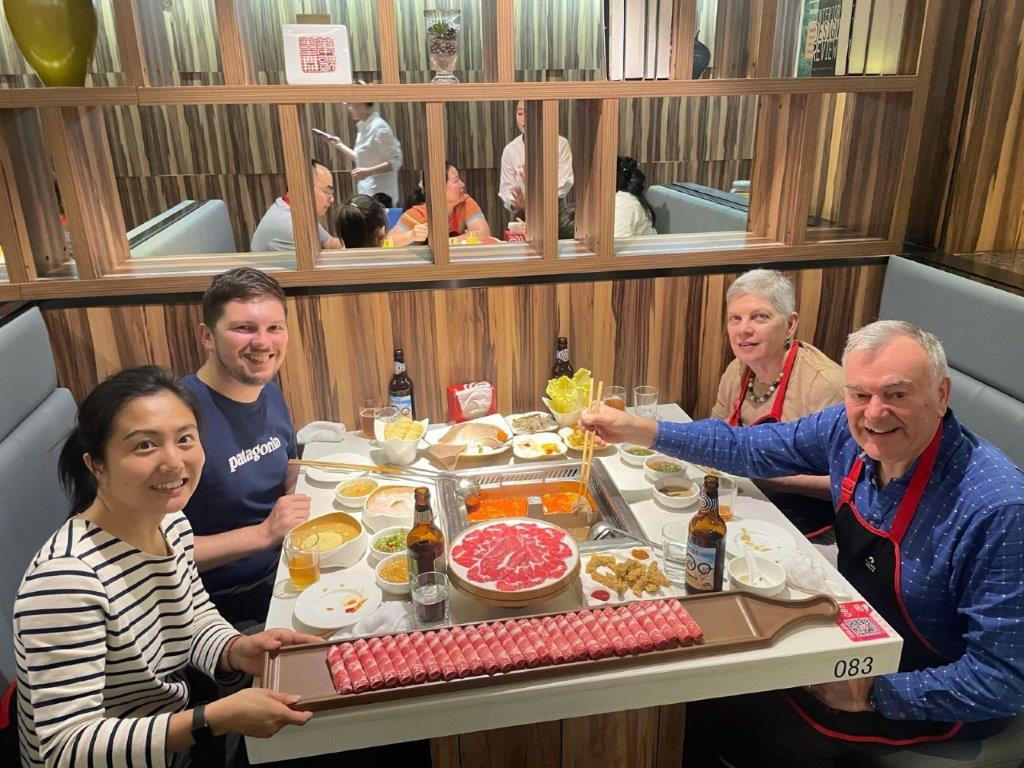
Whilst in Xi’an we tried a hotpot restaurant and a Korean grill. At the first you cook your own food; you can see that the amateurs wore aprons to protect their clothes.
We felt very spoilt at the second as the waiter cooks all the food in front of you. You use lettuce leaves as wraps, so feel very healthy eating it.

Farewell Xi’an. Onto Beijing.

 George and John's boating trip no longer