
So, who saw the recent aurora borealis (Northern Lights)? Or the aurora australis (Southern Lights) if you live on the bottom of the world? It was meant to be a spectacular sight where we are, but all we could see was a very light sky, just like when the Carnivals take place in autumn.
Afterwards, we were told that we should have taken a photo or two. Modern technology is capable of interpreting things differently and we’d have seen all sorts of lovely colours in the photo (red, green, purple, blue and stripes). Ah well, we’ll know next time. I think this is a sunset but still pretty colourful.

Unfortunately, although we didn’t have the excitement of seeing colourful skies, we did have the downside of our internet being affected. We have a line-of-sight set up to the nearest mast and also National Grid power lines close by. These, combined with the geomagnetic storm (caused by CME’s, coronal mass ejections, from the sun), burnt out our receiver. That might not have been too much of a problem if not for the fact that the replacement is hard to find nowadays, with all the shortages happening around the world. If you are lucky (?) enough to be reading this it possibly means I have decamped to a coffee shop somewhere and joined the other workers who hog a table for hours on end with one cooling coffee and a stale pastry. I have been told to get Starlink but those satellites were also suffering from voltage spikes. Maybe I’ll revive the round robin and post it to you all the old- fashioned way.

I think it was the writer Robertson Davies who said that the ultimate test of a book was whether it spoke to you in your youth, in your middle age and when you are old. Only the very best books work for the reader at all these three stages of their life. (What’s more, at each of these stages you may like the book for different reasons).

I have possibly mentioned that I have way too many books (not necessarily my opinion but that of others). In the last few years, I’ve started to pass them on once read, but only if I think I’m not going to want to keep them and read them again. As I’m now of an age where there is not enough time to read all the books I’ve bought but not yet read, I could probably get rid of all my books and not mourn (much). However, I’ve come across this book by Linda Grant. Although I’ve not (yet) bought it, the title and synopsis make me think I might regret clearing the shelves.
I do have previous form. Many years ago, when I lived in a one-room flat in London, I took all the books I’d brought from home and gave them to a charity shop. (Why I didn’t just take them back to my parents’ home I have no idea). Anyway, I then spent many years regretting getting rid of all of them, and occasionally remembering a title and tracking it down. One I particularly recall was “The Last Adam” by Ronald Duncan, still on my shelves somewhere. I’m not getting rid of it a second time. In trying to find out about it today, I came across the fact that he lived in Devon for much of his life and was a prolific writer of poetry and plays. His papers were left to Exeter University in 2016.
https://specialcollectionsarchive.exeter.ac.uk/exhibits/show/ronaldduncan/bibliography
For Christmas George and Yangtze gave me three of the four classic Chinese books. So far I’ve read “The Monkey King” (also know just as “Monkey”, as here).

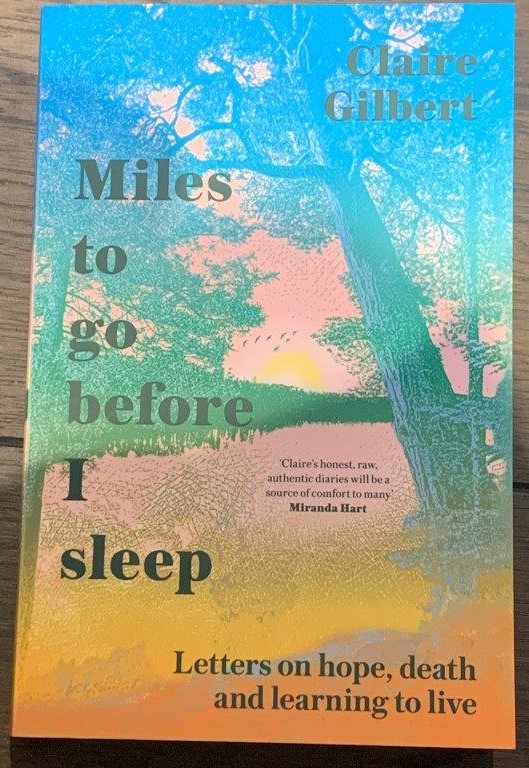
Last year I read a book JD gave me, The Thousand Year Old Garden by Nick Stewart Smith, about the gardens of Lambeth Palace where he works as the Head Gardener. This introduced me to Miles To Go Before I Sleep, whose author Claire Gilbert was instrumental in Nick SS’s book being written and published. Both well worth seeking out. I hadn’t realised that you can visit Lambeth Palace Gardens so they are now on my (ever-growing) list of Things To Do in London.

https://www.westminster-abbey.org/abbey-biographies/dr-claire-foster-gilbert
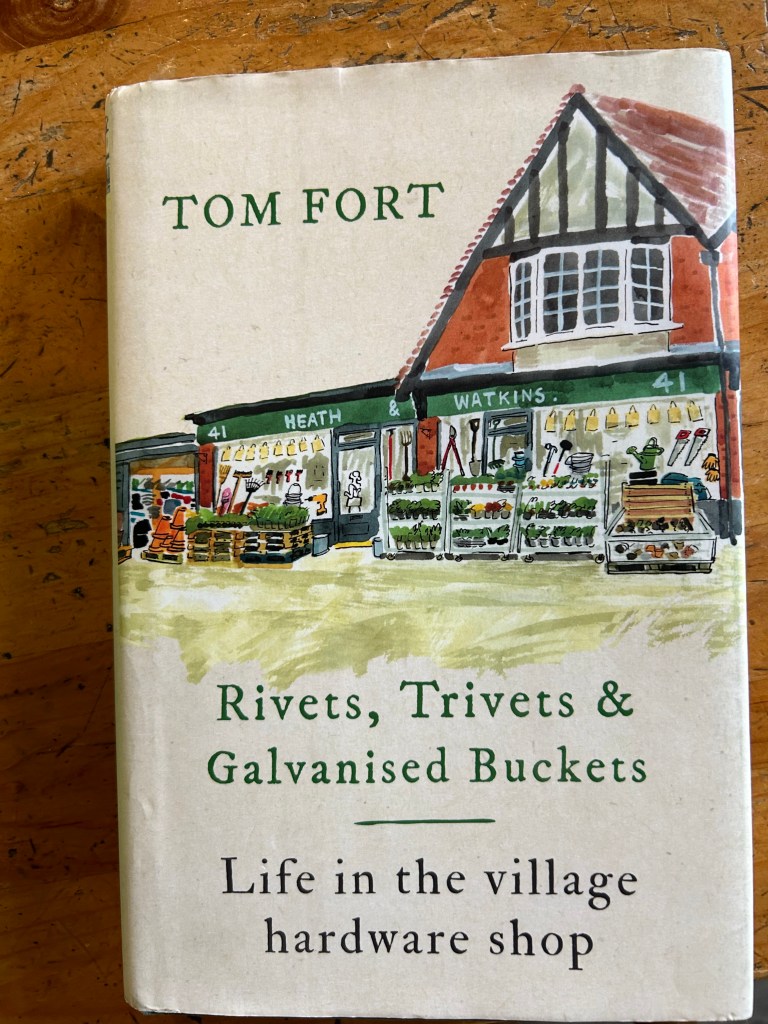
As a details person (sometimes), I obviously keep a list of books I’ve read. You can go onto the Goodreads website and upload them for all the world to see. (You can also leave your opinion but that requires too much thought. Once I’ve read a book I either recommend it to a pal I think will enjoy it, or pass it onto a charity shop). One that I enjoyed that will keep the pernicketiest of people entertained is this, what a wonderful title.
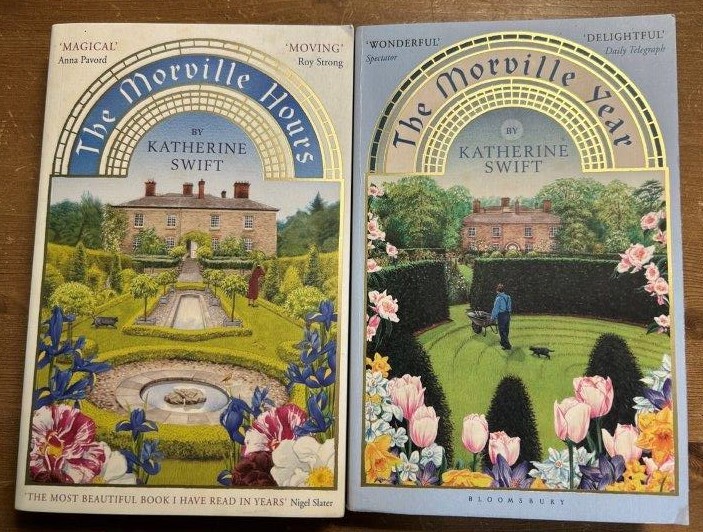
Two very good Katherine Swift books are the Morville Hours and the Morville Year. She took over The Dower House at Morville (Shropshire) in 1988 from the National Trust and totally revived the garden. The first book details her early time there, the history of the house and creation of the garden, while the second goes through a year more systematically and addresses the plants you might see in any given month. It is not necessarily a Good Book, as I now have a long list of plants I want in my garden. I love the covers too, based on the medieval Book of Hours, an example of which you can see above.
Researching the books, I found out that there’s a vineyeard nearby. Must visit it, or at least try the wines.
https://www.gbvg.uk/vineyard/morville-st-gregory-vineyard
We went to a very informative talk last year about The Cockleshell Heroes, which encouraged me to buy the book by Paddy Ashdown entitled ‘A Brilliant Little Operation’. Fascinating and terrifying at the same time, it tells the story of the heroes, who during the Second World War went over to France in a submarine then set off from there in canoes as Operation Frankton into Bordeaux Harbour to sabotage the ships and U-boats being used by the Nazis. Other than their leader Major ‘Blondie’ Hasler and his Lieutenant John Mackinnon, no one knew where they were going or what they had to do until they were on the submarine. There were twelve men with six canoes initially. You’ll need to read the book to find out what happened, but Winston Churchill said it shortened the war by six months.
I don’t just read serious stuff. My preferred genres are science fiction and fantasy, thrillers and mysteries. One light book I can recommend is Richard Osman’s The Thursday Murder Club, purely because it has a Welshie in it! No, it’s a fun read regardless of the dog.
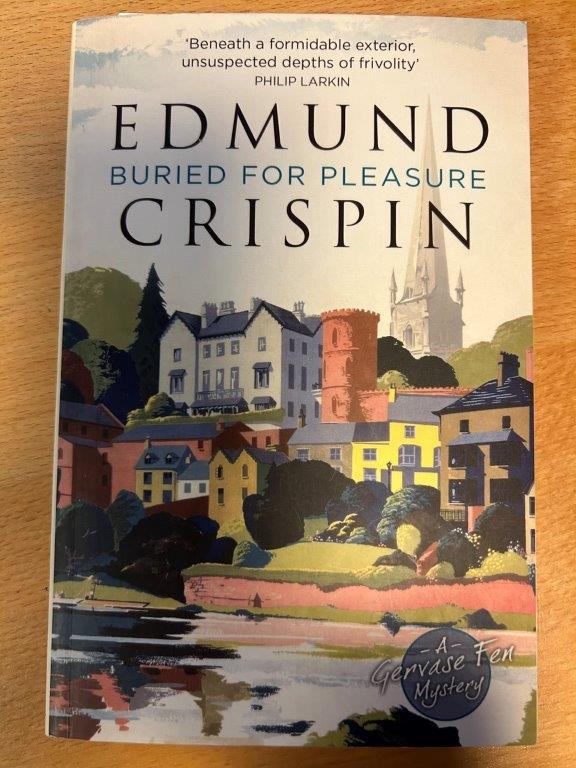
The Golden Age of Crime is generally accepted to be the 1920’s and 1930’s, with authors such as Dorothy Sayers, Agatha Christie, John Dickson Carr, Ngaio Marsh and Margery Allingham. One of my favourite authors is Edmund Crispin, who wrote nine books about his detective Gervase Fen. Edmund Crispin was a pen name of Robert Bruce Montgomery, a concert pianist who also composed music, most memorably for the Carry On Films. Let’s ignore the films, they were of their time but I’m not sure how well they’ve aged. The latest Gervase Fen I’ve read, Buried For Pleasure, takes our hero (an Oxford professor of literature and amateur sleuth) to the (imaginary) village of Sanford Angelorum where he has decided to stand for Parliament.
Despite being written in 1948, it could be applied to possibly a few of today’s MPs. Referring to one of the characters, the following is said by a psychologist: ‘Elphinstone went to the University. There he undertook the study of philosophy, politics and economics – and our records show… that an interest in these subjects often leads on to total madness’. In fact, in the last hour, as I (thought) this Post was finished, I’ve coincidentally heard that we have a general election here in the UK, on July 4th. You can’t accuse me of being behind the times.
I have no further comment on books. Or politics. Instead, here is today’s ‘Superior Word’. It’s Taraxacologist: a big word for someone who studies dandelions. Supposedly there are more than 2,800 species of dandelion. I think we have most of them in our lawn, including a very special one that grows short enough to be missed by the lawnmower, even on its lowest setting. The French word for a dandelion is pis-en-lit, which was also one of the (many) dialect descriptions of them. Try going out and picking a load without washing your hands thoroughly afterwards and see if your bed is dry in the morning. I don’t know if there’s a career in this subject but maybe there are one or two taraxacologists reading this? Please let me know if so.
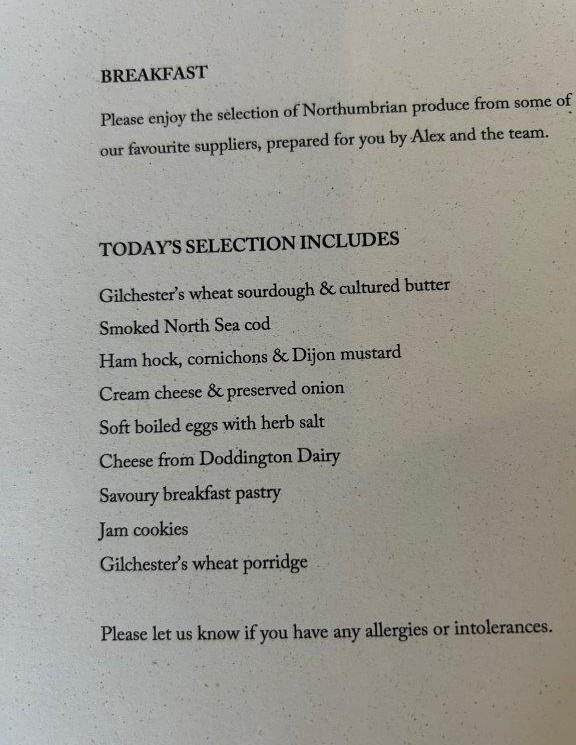
I guess you’ll need a cocktail to finish the week. When we were up in Northumberland recently we stayed at Hjem, a Michelin starred ‘restaurant with rooms’ (as they are now called). I’m not going to bore you with pictures of the fifteen or so dishes we had, but after dinner we tasted a very refreshing cocktail called hibiscus gin spritz. It turned out to be very easy to make (although I did not adorn it with an edible flower, as they did). I bought some hibiscus and rose soda from ‘Something and Nothing’ then mixed it with gin.
https://somethingandnothing.co/
As they make other flavours, I bought a mixed offering. And created a second cocktail with the yuzu soda: 30 ml Melonade (a melon flavoured liqueur previously featured in Post 150 of 19 June 2023), 30 ml yuzu liqueur, 15 ml bitter orange liqueur all topped up with the soda. Again, very refreshing. We were up in time for breakfast as well!
 George and John's boating trip no longer