
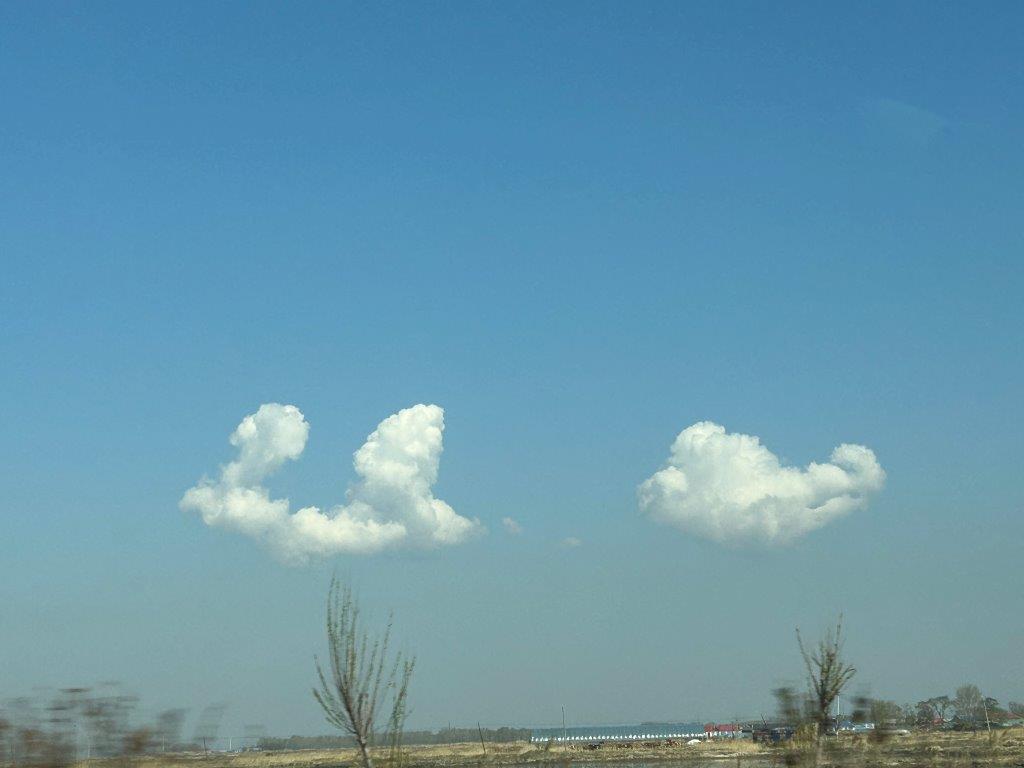
To mis-quote Douglas Adams in The Hitch-Hikers Guide To The Galaxy, first broadcast on BBC Radio 4 then in a book published in 1979, (but on page 62, not, unfortunately, page 42): ‘Space is Big. REALLY Big. You just won’t believe how vastly hugely mindbogglingly big it is’. This applies to China in my opinion, having spent a recent three weeks there with George and Yangtze. We had the most amazing time and have a couple of thousand photos to prove it. Don’t worry, I’ll not subject you to them all. I’ll also try not to repeat myself too much.
Before I start though, to whet your appetite, the last cocktail we had in the UK before we left was Saronno’s Sweetheart. I made this as we had some rhubarb syrup left over from my culinary attempts to use the rhubarb growing in the garden. Take 10 ml of said syrup and add 30 ml brandy, 20 ml amaretto (Disarrono if you have it, hence the name of the cocktail), 20 ml lemon juice, 15 ml apricot brandy and a dash of bitters. Unlike me, make sure you shake it well before pouring it out or you’ll end up with sweet rhubarb sludge at the bottom.

I have difficulty in using words to describe China. Massive, huge, vast all come to mind when looking at the cities or nature or food. Hence letting Douglas Adams speak for me. In this Post I’ll give you some overall impressions of China and the people we met. I’m not commenting on the politics or anything major, that is a different Blog, not mine. In the next n (being an unknown number) Posts I’ll tell you the amazing places we went to and people we met. We were overwhelmed by the kindness of all, although sometimes it was too much, such as when three people tried to help me up or down stairs. Not only were we at danger of falling over each other, we were a hazard to anyone passing.
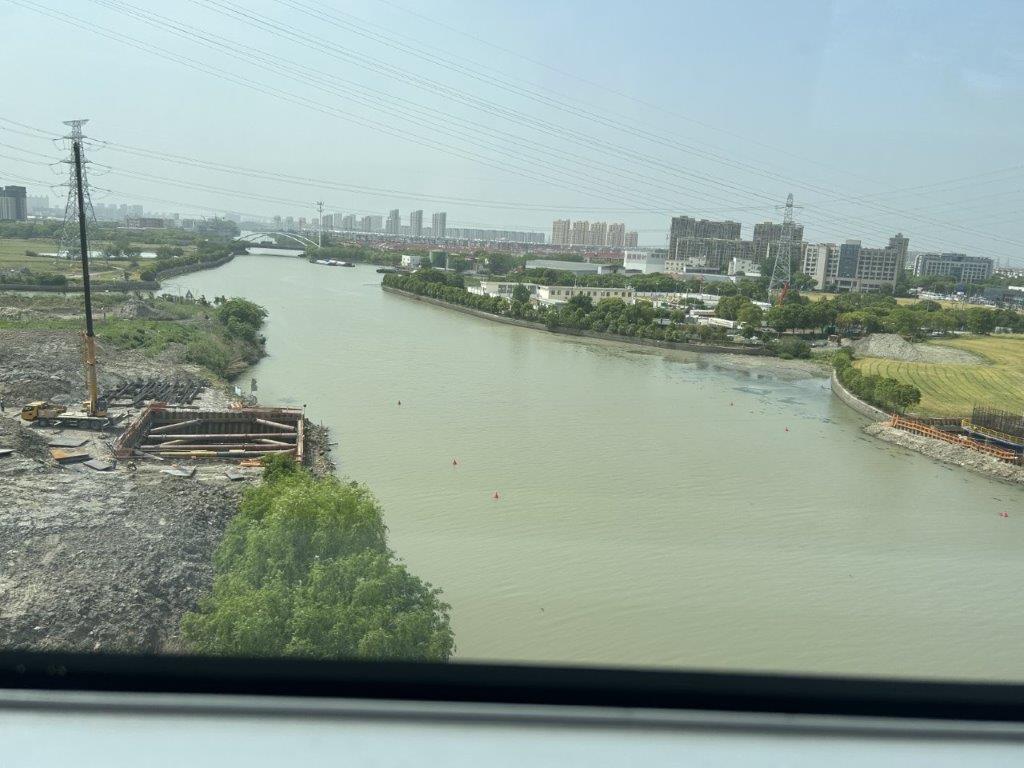
In addition to the sheer size of China is the contrast between the country, which seems stuck in the past, and the cities, which are very modern and huge. There are thirty provinces: we only went into six (Shaanxi, Jilin, Heilongjiang and Zhejiang, plus the two city provinces Shanghai and Beijing). It would be easier (in theory) to visit the rest of these than trying to get around all 50 (or is It now 51?) US states or 109 UK counties (which keep changing name and border under different governments. I was really upset when Grimsby left Lincolnshire and became Humberside. And the three Ridings of Yorkshire were so romantic: only the East Riding remains, with now West, South and North Yorkshire instead).
Sorry, got diverted. The main countryside we saw was taken up with farming: villages are few and far between, with effectively strip farming, where each family looks after their own patch, although there is a village head making sure things run smoothly. Most of the fields were being flooded ready for rice growing. No one wants to live in the country, especially the younger generation, and people cannot understand the British wish to move out of the city.

In the cities, life consists of big blocks, usually one apartment deep so you have light on both sides. Hardly anyone one has gardens (and if so, only to grow vegetables. Why waste your time on flowers?). Many of the cities are only a couple of decades old, so you go suddenly from countryside to high rise with no suburbs in between.

I did not use public transport, other than the trains, but the most basic form is the bikes that you can just pick up and leave when you reach your destination. There must be more bikes than people.
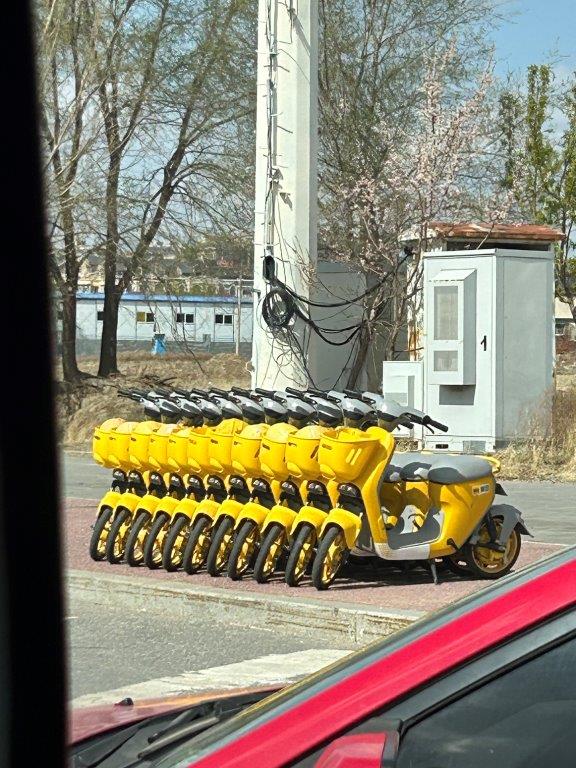
The use of hired scooters is also popular to avoid being stuck in traffic, but in most (all?) places they have to be electric not ICE. You should wear a helmet, but the north seems to regard this as optional rather than mandatory. In some places, you can only drive around on alternate dates, depending if your number plate ends in an odd or even number. In (Shanghai and Beijing) the number plate is more valuable than your vehicle, as an old one can confer permission to drive in the city. We were told that, in one province at least, a new car (or owner?) has a temporary number plate for the first two weeks, so if you exceed the speed limit, for example, you won’t get caught. In Shanghai it is forbidden to sound your horn; we didn’t really notice until we moved on and were exposed to the cacophony of horns everywhere. It seems to be a universal truth that a person in possession of a car horn must be in want of using it. The road signs are pretty confusing if you’re not used to them (and maybe if you are), with U-turns being common.
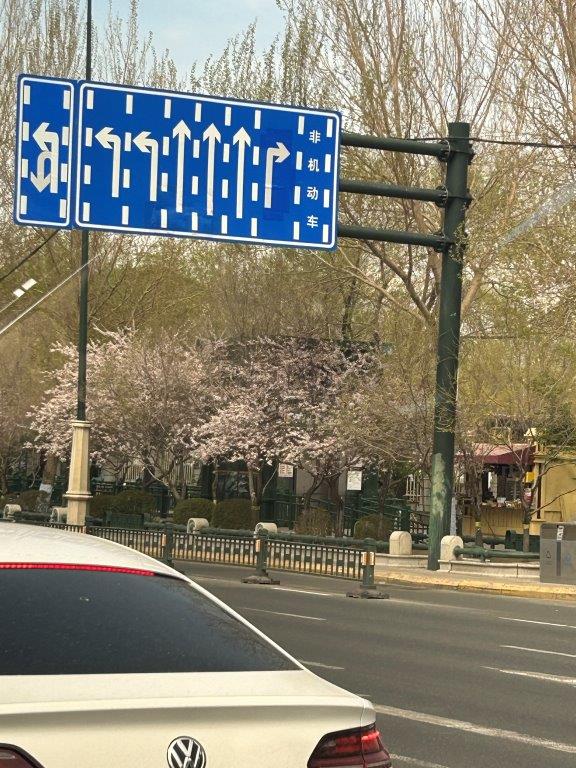
On the whole, the roads in the cities are shared pretty equally between pedestrians, bikes, cars, buses etc. and so the traffic is relatively slow and polite, giving way to whoever gets to the junction first. They are very wide, with four or five lanes in each direction and so many flyovers, with ivy and flowers growing on them: it reminds me of the films Blade Runner or Logan’s Run.


Only missing were the flying vehicles zipping around in the sky, and I’m sure they won’t be long in coming. (Both films I should add to my watchlist again. Harrison Ford, Peter Ustinov, Michael York and Jenny Agutter, all great actors in my view).

I saw one car I want: the photo doesn’t do it justice. As you pass it the colour changes from shimmering pink to shimmering blue.
Without wishing to put you off your breakfast, the sanitary conditions differ. Most of rural China has very basic sanitation and mostly provide the ‘squatting pans’ where you have to balance. More hygienic in some ways, but not if you’re likely to fall over (or into the pan). From memory these used to be fairly common in France and Italy, but I think they are being replaced by ‘Western’ toilets now. You also need to take tissues with you as toilet paper is not available in many public toilets.

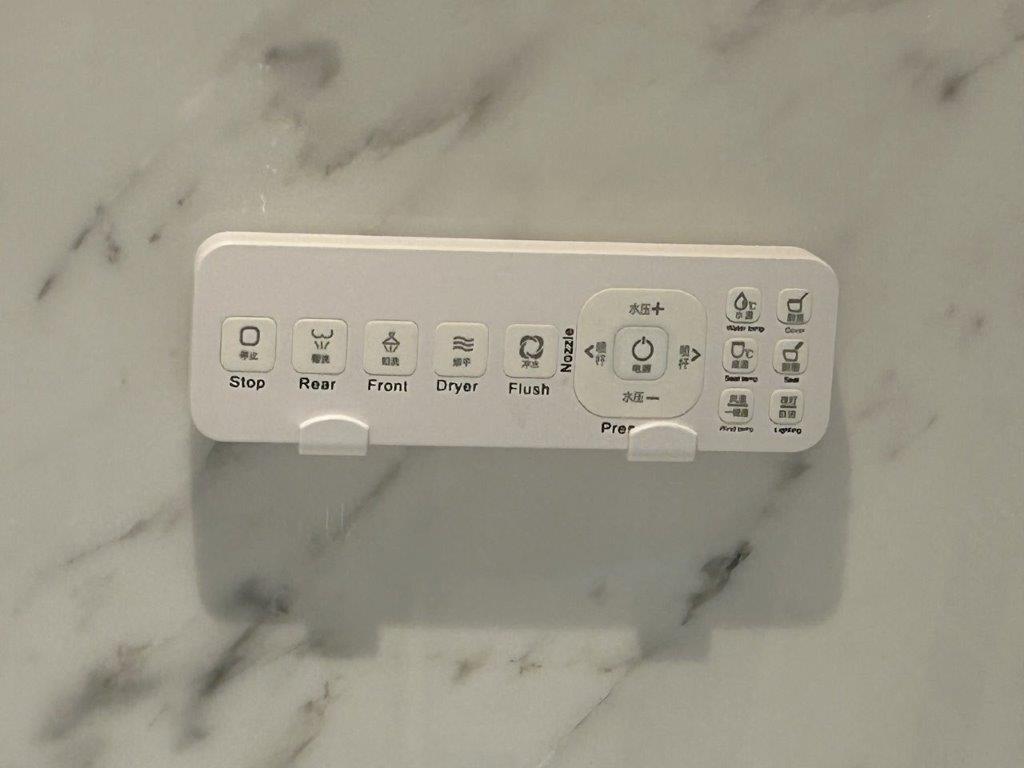
In contrast, many places have ultra-modern ‘Japanese’ toilets. The first time I tackled one, in a Michelin 3 star restaurant, I found it very confusing, with buttons for hard rear, soft rear front, controls for temperature, pressure, dryer. Too scary to contemplate. Many of the hotels we stayed in had them, all with subtly different controls. In the middle of the night, it was quite fun to approach the toilet and have the lid lift, an eerie glow appear in the pan, sit on a pre-warmed seat (some at 36 degrees C) and then hear it flush automatically as you left. There was even a bar code to help you. I didn’t dare download it in case I got more confused. If I ever visit you and forget to flush, please blame the system, not me.
A bit like sounding horns and wearing helmets on scooters, the further north you go, the more evident the flouting of smoking rules. The rule of no smoking is national but it is not even expected to be observed in some places. I’d forgotten, after all these years, about going into a public space (England banned smoking in 2007), and being assailed by the scent of old smoke.

The hotels have the sensible if worrying precaution of providing smoke face masks in every room. I hoped that they would give us a safety briefing like on planes but no luck.

There is zero tolerance to drink driving, but you can hire someone: they’ll arrive on an electric scooter which they put in the boot of your car, drive you home, then go off on the scooter to the next job. As insurance is for the car there is no issue with who drives, unlike the UK.
Talking of drinking, there is a very different attitude, with little to no bar culture. We had very few cocktails and when we did (usually in the hotel bar), we were the only ones drinking in them. Outside of Shanghai, or international restaurants, you drink either beer or baijiu, which is a grain spirit made from sorghum, wheat or rice, of over 50% proof (strong). Usually, you are given either hot water (possibly with lemon) or tea when you sit down for a meal, and it is replenished throughout.
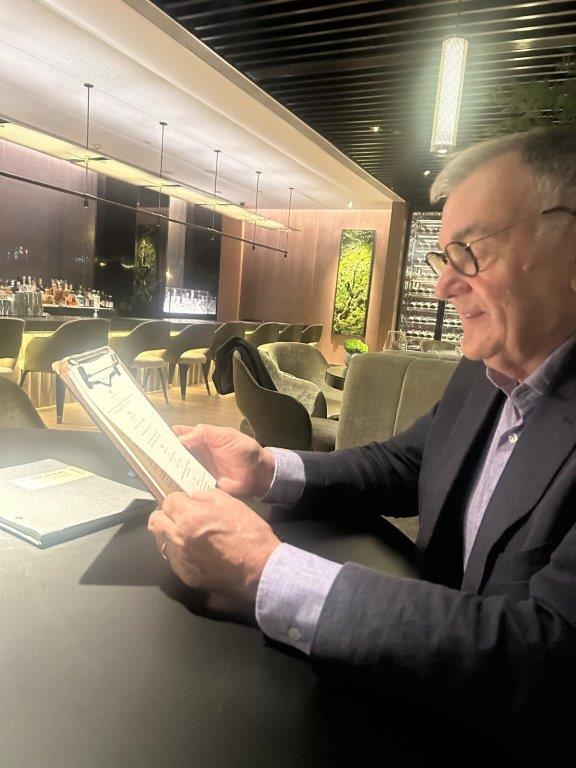
In order to sip (or gulp) your alcohol, you are expected to toast everyone at the table. As eating tends to be from communal dishes in the centre of the table, you might have to wait until everyone has helped themselves to some food beforehand. You therefore remain sober but thirsty. In a big group, by contrast, you could find yourself having a gulp all the time if they don’t wait. Is drinking 5 ml shots of 53% baijiu every time someone gives a speech better or worse than sipping 14% wine continuously? I think sticking to water or tea is easier.

Unlike the UK, where 13 is considered unlucky (due to there being 13 at Jesus’s Last Supper I believe) and seven often considered lucky (I’m not sure why, any suggestions welcome), in China the number 13 is fine but number four is considered bad, as it sounds like death (si, pronounced suh), to the extent that hotels and apartment complexes will have floors 3A, 13A and 23A instead of the expected numbers.
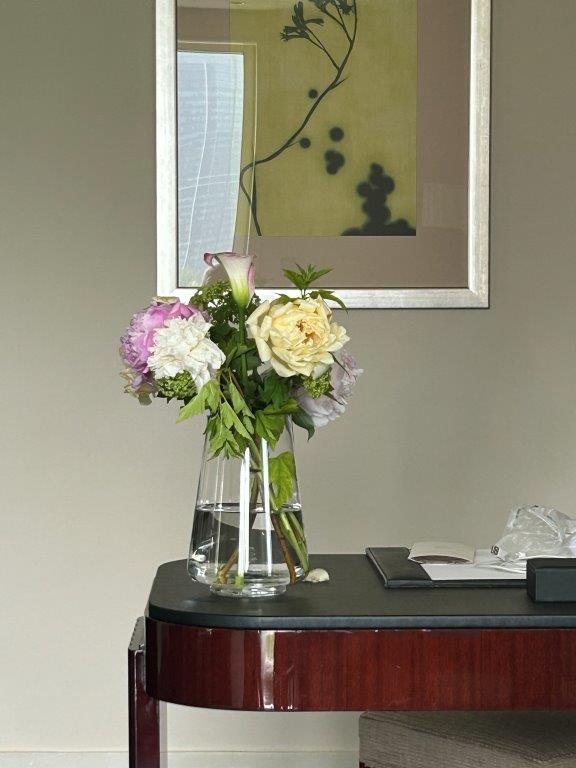
I don’t know if it’s common practice or just Y’s family, but we were given some lovely bouquets. Unfortunately, we ended up leaving most behind for the hotel staff as we didn’t fancy carrying them on the planes when off to our next destination.


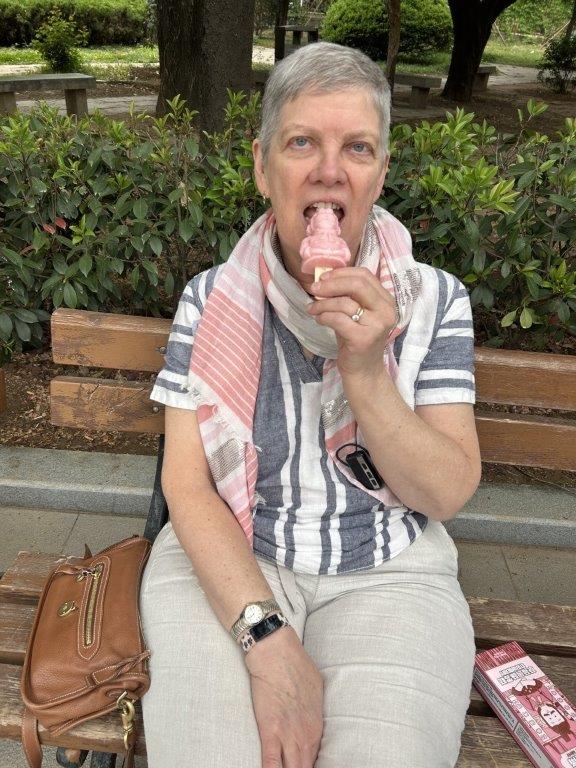
Possibly the most fun part of the holiday was the ice creams. I’ve not seen it elsewhere but maybe you can get ices of the Eiffel Tower, Royal Albert Hall or San Francisco Bridge. I think I need a 3D printer and I can start up a business. We only had three: a Terracotta Warrior, the Great Wall and Forbidden City. (I’ve now given you a preview of some of the places we saw).



Finally, if you go to China, I’d suggest you invest in a pair of cargo pants. You need to carry your passport, phone (for photos and contacting people) and tissues (as already mentioned). You want to avoid having a bag as these will be searched (or at least put through a screen) and the queues can be long. We were lucky not to have too many queues. Pockets are the ideal, to help you skip queuing. Also, I entered the modern world by downloading the app Alipay onto my phone and using it to pay restaurants. It took a bit of effort: some restaurants read my QR code and in some I had to read theirs. The first couple of times for each caused delays and / or restrictions. If you do use your usual bank card, be warned that the card machine readers have a sensible way of avoiding being scammed, by changing the order of the numbers every time. If you’re in the habit of not looking and just punching in your usual four digits, it won’t work.
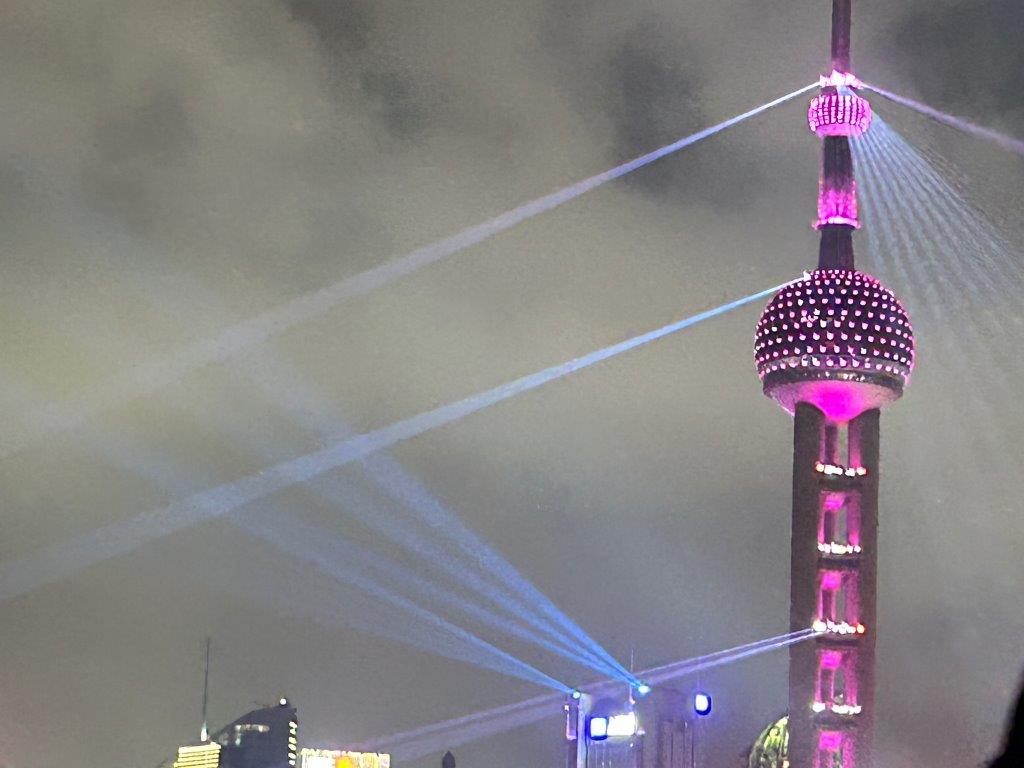
Next up, Shanghai and beyond.
 George and John's boating trip no longer